


Deezer makes radio obsolete for most listeners
Deezer is a music streaming service where you can listen to music, radio, podcasts, and personalized mixes in one app.
We tested Deezer on Windows 11 and mobile, and our first impression was pretty clear: the app feels simpler than many expect. Where Spotify often fills the screen with playlists, promos, and recommendations, Deezer is more straightforward and less “noisy” in everyday use. That suits listeners who just want to open the app and quickly start music, radio, or a personal mix.
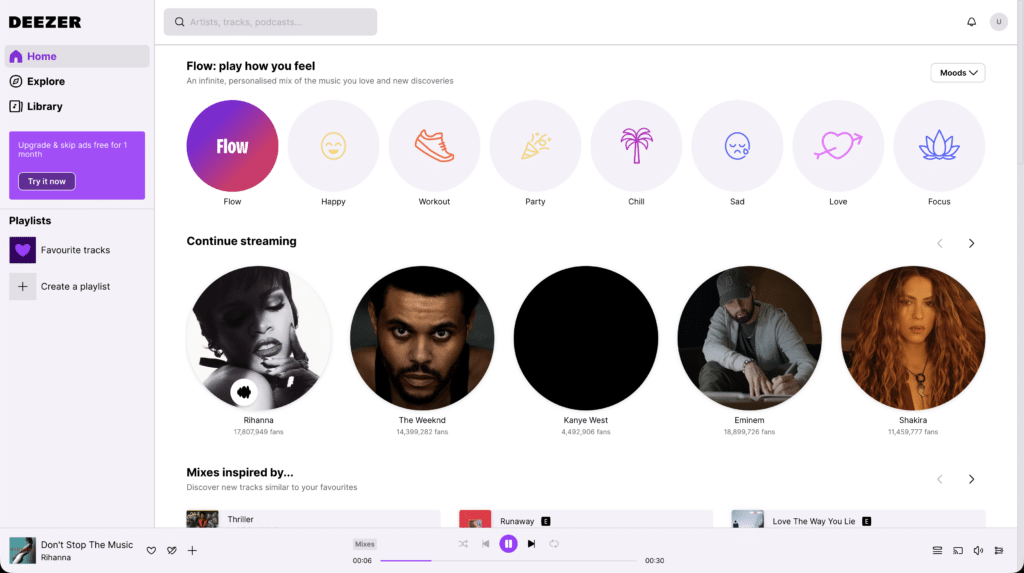
The smart thing about Deezer is that it works for people who just want to hit play, as well as for those who care about audio quality, lyrics, and personalized recommendations. The service offers Flow (Deezer’s personal mix), lyrics with translations, SongCatcher to identify music around you, and paid tiers with offline listening, ad‑free playback, and HiFi audio. The Windows app is available in the Microsoft Store, and Deezer also works on iPhone, iPad, and Android.
What is Deezer?

Put simply, Deezer competes with Spotify, YouTube Music, and Apple Music. You get access to a very large music catalog, editorial playlists, radio, and personalized recommendations. According to Deezer’s app descriptions, the focus is on a more personal listening experience that adapts to your taste over time.
You can feel that pretty quickly in practice. During our test, the Flow feature started hitting reasonably well after a short time. Not perfect, but good enough that you want to let it run—especially while working, cooking, or when you just want music without choosing every single track yourself.
Deezer vs. Spotify – where does Deezer stand out?

The obvious question is why you’d choose Deezer over Spotify.
In our view, Deezer’s strongest play is the combination of Flow, lyrics, radio, and an interface that feels less hectic. Deezer also highlights features like Shaker, which blends music tastes with friends, and SongCatcher, which can identify music—even when you hum. On paid plans you also get offline mode, unlimited skips, and HiFi audio.
Spotify is still bigger in the US, and many will find their friends are already there. But that doesn’t make Deezer uninteresting. On the contrary, Deezer is a solid alternative if you’re tired of using the same music service as everyone else, or if you want more focus on lyrics, radio, and personal mixes without too much clutter.
Deezer Free or Premium?
Deezer Free still exists, but the free version comes with ads and limitations. Deezer describes Free as catalog access with ads and limited features, while Premium plans unlock ad‑free playback, offline mode, on‑demand listening, and HiFi audio. There are also Duo, Family, and Student plans.
That matters in practice. If you just want to try the app, the free version is fine. But if you commute, travel, or simply hate ads between tracks, Premium quickly makes more sense. Offline listening and unrestricted playback are especially hard to give up once you’re used to them.
What Deezer is like day to day
One of the things we liked most while testing was that Deezer doesn’t require much adjustment. You open the app, pick music, and you’re off. It sounds basic, but that’s actually a strength. Some streaming services try to be so “smart” that they end up getting in the way of the music.
The lyrics feature is also better than you might think. Whether you want to sing along, understand the words better, or just like following the lines, it’s a feature you end up using surprisingly often. Deezer itself highlights lyrics with translations as a core part of the experience.
That said, Deezer still lives a bit in Spotify’s shadow in the US. This means some users will land here only if they’re actively looking for an alternative—or if they specifically want to try Deezer Premium, Deezer Flow, or compare Deezer pricing with competitors.
Is Deezer worth downloading?
Yes, it actually is.
Deezer isn’t the loudest music service in the US, but it has several features that make it more interesting than many expect. If you want a music app that combines personal recommendations, radio, lyrics, and offline listening in a calmer interface, Deezer is a strong pick.
For some, Deezer will still feel like “just another streaming service.” For others, it quickly becomes the app that replaces both radio, an old MP3 collection, and the habit of listening to whatever happens to be on. That’s likely where Deezer wins its fans.
Top 5 Deezer tips
Get more out of Deezer with five simple tips we noticed during testing.
Start by using Flow actively for a few days in a row. In our test, recommendations improved significantly the faster we liked songs, skipped irrelevant tracks, and saved favorites. Deezer learns a lot from that behavior, so Flow works best when you actually use it as your daily music channel.
It depends on how you listen. The free version is fine for testing the app, but if you commute, travel, or just hate ads between tracks, Premium quickly makes more sense. Offline music and on‑demand playback are especially hard to give up once you get used to them.
Yes, for many people it can. We tested Deezer as a daily music app on both desktop and mobile, and it felt calmer and less cluttered than some other streaming services. If you care most about personal mixes, lyrics, and a cleaner interface, Deezer is a real alternative—not just a copy.
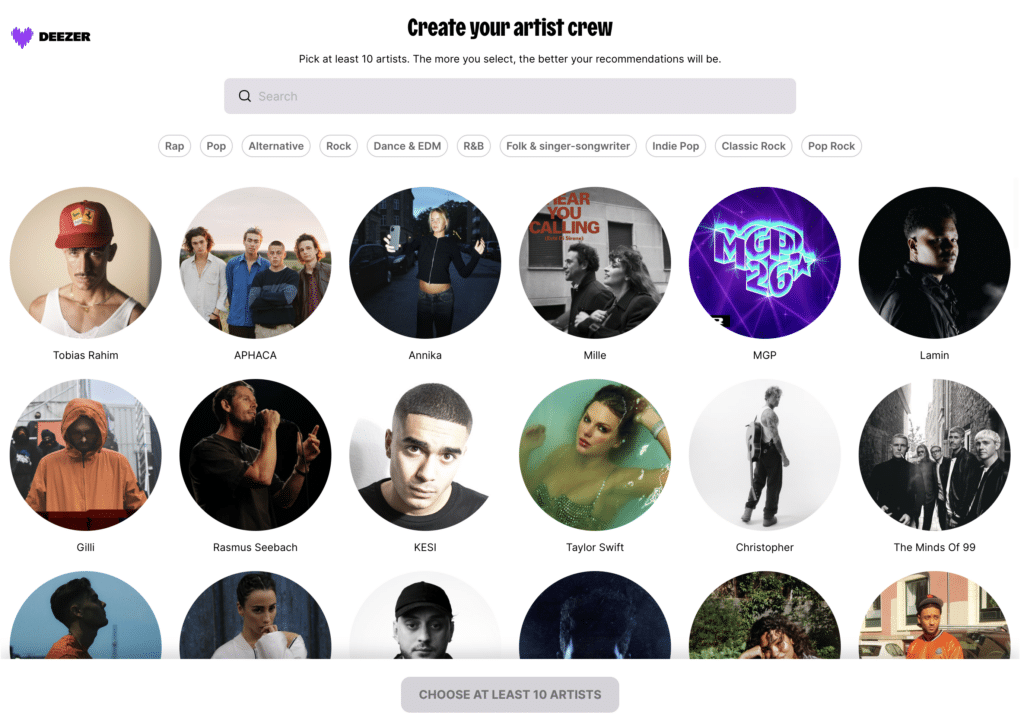
The best trick is to build your profile immediately. Follow your favorite artists, save a couple of albums, and mark the first songs you actually want to hear again. That makes recommendations much more accurate from the start, and the app feels personal faster instead of just being another generic music player.
Many overlook the lyrics feature. It sounds like a small detail, but in practice it’s one of the features that makes the app feel more alive. We ended up using it more than expected—especially on new tracks where you want to catch the words right away, or when you’re casually singing along.