


FIFA 26, officially called EA Sports FC 26, is the successor to FIFA 25 and builds on the gameplay foundation EA has developed in recent years. But how big is the difference if you already own FIFA 25? And is there enough new content to justify an upgrade?
Here we break down the key differences between FIFA 26 and FIFA 25—without focusing on specific countries, leagues, or platforms.
Gameplay: More control and better flow
The most noticeable difference between FIFA 26 and FIFA 25 lies in the gameplay itself. FIFA 26 has a more balanced pace that rewards patient build-up play over constant quick passes.
Where FIFA 25 often felt hectic, FIFA 26 delivers:
- More natural off-the-ball movement
- Better passing timing
- Fewer random turnovers in midfield
Matches generally feel more structured and less chaotic, especially in tight contests.
AI and tactics: FC IQ makes a clear difference

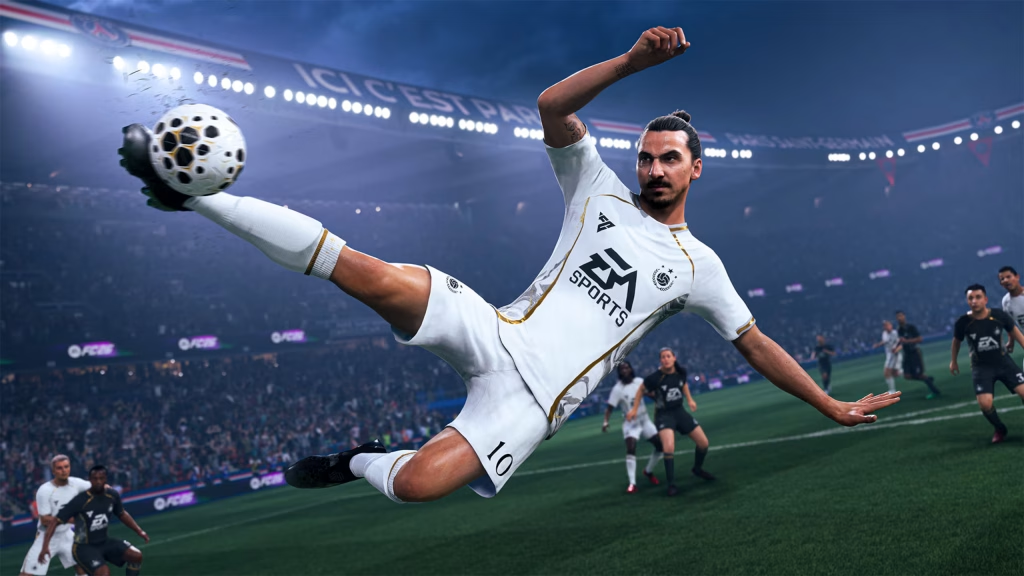
FIFA 26 introduces a more advanced AI system, often referred to as FC IQ. Instead of merely reacting to the ball, teammates now continuously read the match situation.
How it differs from FIFA 25:
- Players automatically adjust pressing and positioning
- Team behavior shifts based on game context
- Defensive and attacking movements feel more coordinated
This creates a more realistic sense of team tactics and on-pitch cohesion.
Player roles: From generic to specialized
In FIFA 25, player behavior was largely tied to positions and general instructions. In FIFA 26 there’s a much stronger focus on individual roles.
Players can now behave differently, even in the same position, depending on their role within the squad. That results in:
- Greater tactical variety
- Clearer differences between player archetypes
- Better ability to tailor your team to your playstyle
This stands out especially in longer matches and Career Mode.
Goalkeepers and animations
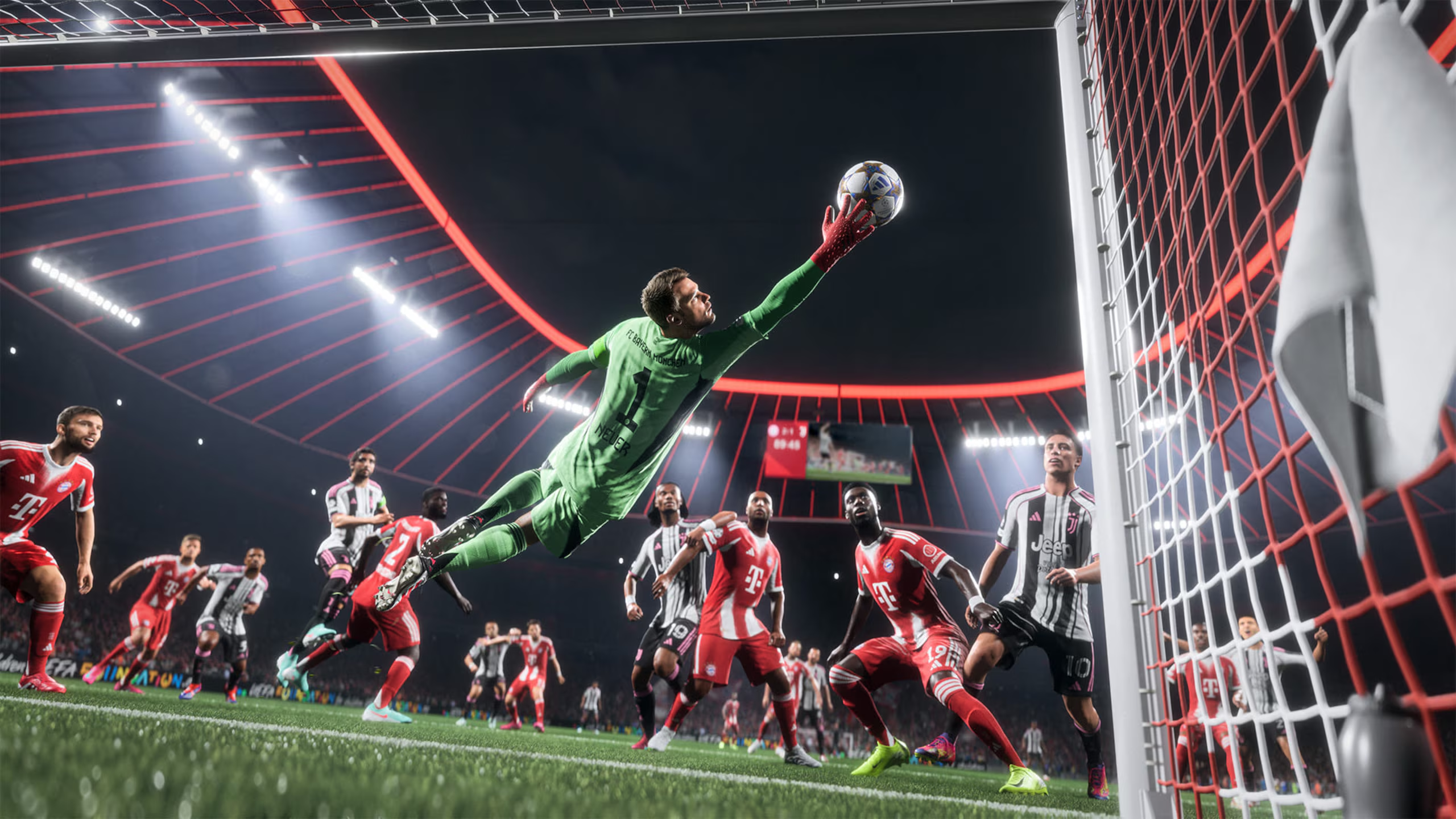
Another clear difference between FIFA 26 and FIFA 25 is the goalkeeping system. In FIFA 26, keepers feel less uniform and react more naturally under pressure.
Improvements include:
- Better positioning
- More realistic saves
- Fewer illogical rebounds
Animations overall are also smoother, especially in duels and close-range finishes.
Game modes: Familiar structure, better execution
The structure of the classic modes is largely the same as in FIFA 25, but FIFA 26 polishes the experience.
Notable improvements include:
- Career Mode with more dynamic decision-making
- Ultimate Team with faster menus
- New ways to play short, high-intensity matches
This isn’t a total reinvention—rather a more refined take on the existing content.
Graphics and presentation
Visually, the difference between FIFA 26 and FIFA 25 isn’t revolutionary, but it’s still noticeable. FIFA 26 offers:
- More detailed player models
- Improved facial animations
- More vibrant stadium atmosphere
Replays and close-ups in particular look more lifelike than in the previous release.
Who should upgrade from FIFA 25 to FIFA 26?
FIFA 26 isn’t a dramatic revolution, but a clear evolution.
Upgrading makes the most sense if you:
- Play a lot of matches online
- Care about tactics and squad building
- Use Career Mode regularly
If you mainly play casual matches and were satisfied with FIFA 25, the differences will feel subtler—yet still noticeable over time.
Is FIFA 26 better than FIFA 25?
Yes—overall, FIFA 26 is a more mature and balanced soccer game than FIFA 25. The improvements don’t hinge on a single headline feature, but on the sum of gameplay, AI, and realism.
That makes FIFA 26 the most polished entry in the series since the name change to EA Sports FC.