


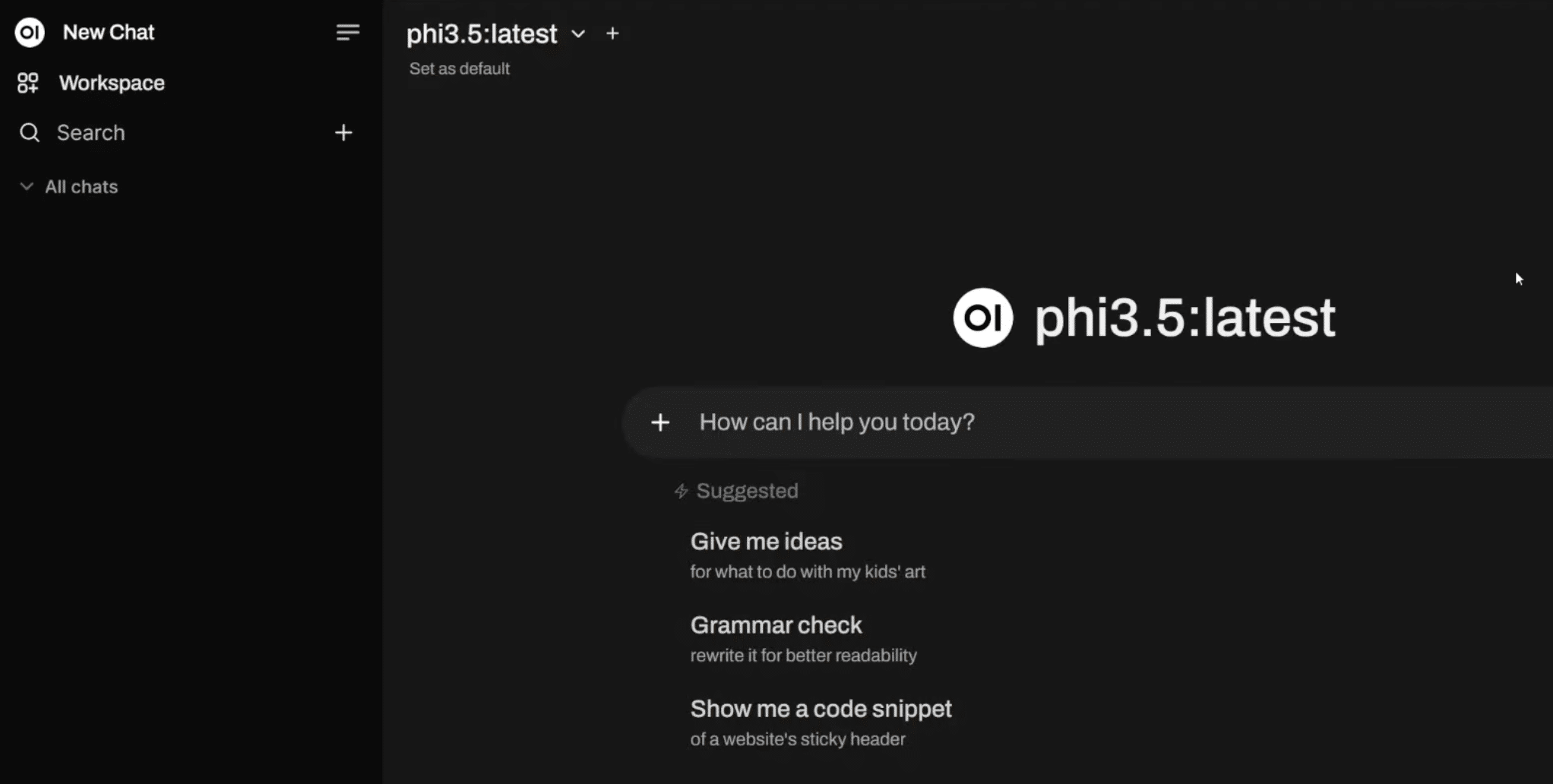
Open WebUI download – local AI on your terms
Open WebUI is a free, open-source AI platform that makes it much easier to run local AI, connect Ollama, use cloud models, and manage everything in one clean interface.
We tested Open WebUI on a Windows 11 PC with a focus on what many people want right now: a more flexible way to use local AI than just a simple chat window. Our first impression was clear. Open WebUI feels less like “yet another AI app” and more like a compact control center where you can bring models, tools, documents, and workflows together in one place.
If you’ve already looked at Ollama, LM Studio, or other local AI options, Open WebUI is a very compelling next step.
What is Open WebUI?

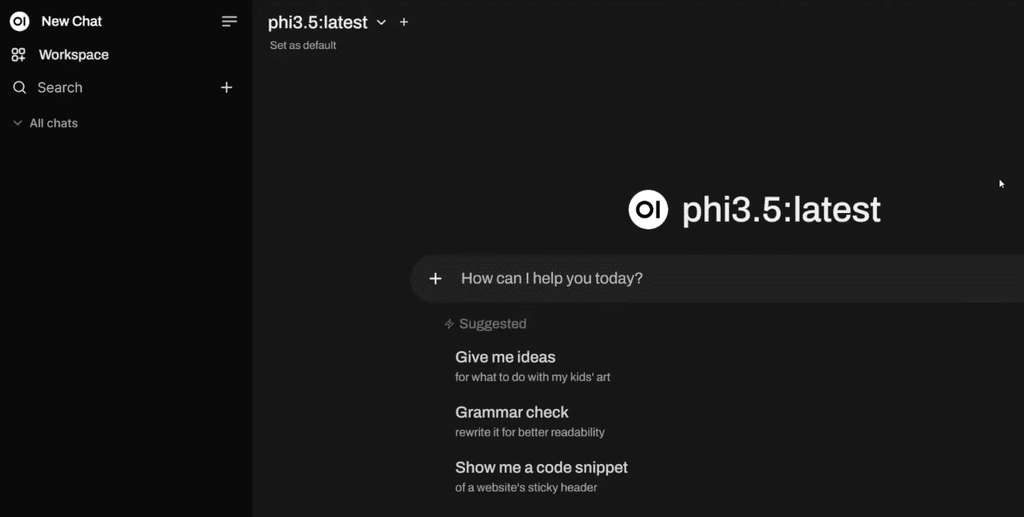
Open WebUI is a self-hosted AI platform that can connect to both local models and cloud-based models. The smart part is you’re not locked into a single provider. You can connect:
- Ollama
- OpenAI-compatible APIs
- other model providers and servers
- local models on your own machine
In practice, that means you can use Open WebUI as the place where you manage your entire AI setup. For some, it becomes a kind of local ChatGPT solution. For others, it turns into a more advanced workspace for documents, RAG, plugins and tools.
It’s especially relevant in the United States right now, as more and more people want to use AI without sending all their data straight into a closed cloud solution.
Open WebUI download for Windows, Mac, and Linux
One thing we really liked in testing is that Open WebUI no longer feels like it’s only for people who love the terminal.
There’s now a desktop app for Windows, macOS, and Linux, so you can get started faster without diving into Docker on day one. That makes Open WebUI far more relevant for everyday users at Holyfile.
It’s worth noting the desktop edition is still in an early alpha phase. That doesn’t make it unusable—far from it—but expect occasional quirks or rapid changes from version to version.
If you want the most robust setup—especially for more serious use—Docker or a Python installation is still the more “production-grade” choice.
Open WebUI with Ollama – this is where it gets really fun
Open WebUI makes even more sense if you already use or are considering Ollama.
While Ollama excels at fetching and running local models, Open WebUI gives you a more user-friendly front end on top. That makes a big difference in practice. Instead of jumping between the terminal, scripts, and half-finished workflows, you get a polished, functional interface where you can:
- choose models
- manage conversations
- work with files and knowledge bases
- use tools and extensions
- combine local AI with cloud AI
In our testing, this is exactly where Open WebUI stood out. If LM Studio often feels like a great beginner app for local chat, Open WebUI feels like a place you can grow into.
Features that make Open WebUI stand out
Open WebUI isn’t just “another AI chat.” The platform already includes several features that make it far more interesting than many other free alternatives.
1. Local and cloud AI in one place
You can use local models while also connecting cloud services. That makes Open WebUI flexible—great if you want privacy but still need access to stronger models on demand.
2. Offline-first and better data control
If you run models locally on your own machine, you have far better control over your data. That’s a big plus for home users, students, and small businesses.
3. Plugins, tools, and extensions
Open WebUI clearly aims to be more than an AI chat. You can work with tools, features, and community extensions, which makes the platform more future-proof.
4. RAG and working with documents
If you want to use AI on your own documents or build a knowledge base, Open WebUI is compelling. This is the kind of feature that often marks the difference between a “fun demo” and a real work tool.
5. Desktop app and easier setup
It’s a big plus that new users can now start more easily. Open WebUI still isn’t the simplest AI app on the market, but it has become significantly more accessible.
Open WebUI vs LM Studio and Ollama
The short answer:
- Ollama is great for downloading and running models
- LM Studio is excellent for beginners who want to start local chat quickly
- Open WebUI is best when you want a more complete platform around your AI use
If you just want to test a local model in five minutes, LM Studio is still easier for many users.
If you want a more flexible setup—working with multiple models, documents, extensions, and tighter data control—then Open WebUI is the stronger long-term choice.
That’s exactly why the program is so interesting for Holyfile. It fits the wave of users moving from “I want to try local AI” to “I actually want to use this every day.”
Performance, system requirements, and what to watch out for
Open WebUI itself isn’t particularly heavy, but local models can be.
The key point: Open WebUI doesn’t make hardware requirements disappear. If you want to run models locally, your computer still needs the horsepower. A lightweight machine can comfortably use Open WebUI as the interface and connect to an external server or a cloud model. But if you want to run larger models locally, you’ll typically need more RAM.
As a rule of thumb, Open WebUI is far more exciting if you have a reasonably modern PC or Mac. On older machines, it often makes sense to start small or connect remotely to a model server.
Is Open WebUI secure?
Open WebUI is compelling for users who care about control and privacy. The whole idea is that you can run AI on your own terms.
It’s important to distinguish between the platform and how you use it. If you run local models and keep the setup on your own machine, you generally have strong control. If you connect external services, cloud models, or open tools, security naturally also depends on those choices.
We’d call Open WebUI a strong option for private, controlled AI use, but not a magic shortcut where you can switch your brain off.
Why Open WebUI is worth downloading
Open WebUI nails something many AI programs still struggle with: it feels both ambitious and genuinely useful.
It won’t be the easiest option for everyone. Brand-new users may still find LM Studio more straightforward for the first 10 minutes. But Open WebUI has a higher ceiling and gives you more to work with once you get going.
To us, it’s the kind of software that’s fun to follow closely because it’s evolving fast and truly solves a growing need: using AI more freely, more privately, and more flexibly.
Top 5 tips for Open WebUI
1
Start with Ollama to keep it simple
If you’re new to local AI, the combo of Open WebUI and Ollama is a great place to start. Ollama handles models in the background while Open WebUI gives you a cleaner, more intuitive interface on top.
2
Begin with a smaller AI model
It’s tempting to grab a huge model right away, but we recommend starting smaller. You’ll get faster responses, use less RAM, and it’s easier to see how much your computer can really handle before moving up to heavier models.
3
Organize your local and cloud models
Open WebUI can unify both local AI and cloud services. Give your models clear names and keep some structure from the start. It quickly gets hard to remember which model runs locally and which sends requests to an external service.
4
Use your own documents and knowledge
One of the most useful features is working with your own documents and knowledge bases. That makes Open WebUI far more helpful than a basic AI chat—especially if you want to search notes, manuals, reports, or other materials.
5
Treat the desktop app as the easy on-ramp
If you’d rather avoid Docker and terminal commands, the desktop version is worth a try. It’s still early in development, so don’t be surprised by occasional minor bugs—but for typical Windows, Mac, and Linux users it makes getting started much easier.
FAQ about Open WebUI
FAQ Is Open WebUI free?
Yes. Open WebUI is free and open source, so you can install and use the platform without a standard subscription. Any external AI services you connect to Open WebUI may have their own pricing.
FAQ Can I use Open WebUI on Windows?
Yes. Open WebUI works on Windows 10 or later. There’s also a desktop app that makes setup easier if you don’t want to configure Docker or Python manually.
FAQ Does Open WebUI work with Ollama?
Yes, and in our view it’s one of the best ways to use the program. Ollama runs AI models locally while Open WebUI serves as a more complete, user-friendly front end.
FAQ Is Open WebUI better than LM Studio?
It depends on your needs. LM Studio is very easy if you mainly want to fetch a model and chat locally. Open WebUI offers more options for models, documents, tools, servers, and advanced workflows.
FAQ Can Open WebUI run fully offline?
Yes. If you use a local model and have the required files installed, Open WebUI can run without sending your conversations to an external AI service. The desktop app requires internet during the initial setup.
FAQ How much RAM does Open WebUI need?
The interface itself isn’t the issue—it’s local AI models that consume memory. For local inference, 16 GB RAM is a reasonable starting point, while 32 GB or more gives you much more freedom for larger models.
FAQ Is Open WebUI safe to use?
Open WebUI enables private AI use because models and chats can run on your own computer or server. Security also depends on the models, plugins, APIs, and external services you choose to connect.
FAQ Do I have to use Docker with Open WebUI?
No. Docker is still a popular way to install Open WebUI, but you can also use a Python installation or the newer desktop app for Windows, macOS, and Linux.