 Martin Jørgensen
DeepSeek AI – the Chinese challenger to ChatGPT
DeepSeek is an advanced AI chatbot developed in China that has quickly become a hot topic among developers, tech media, and AI enthusiasts worldwide. On the surface, it resembles ChatGPT, but it differs in several important ways—technically, politically, and in everyday use.
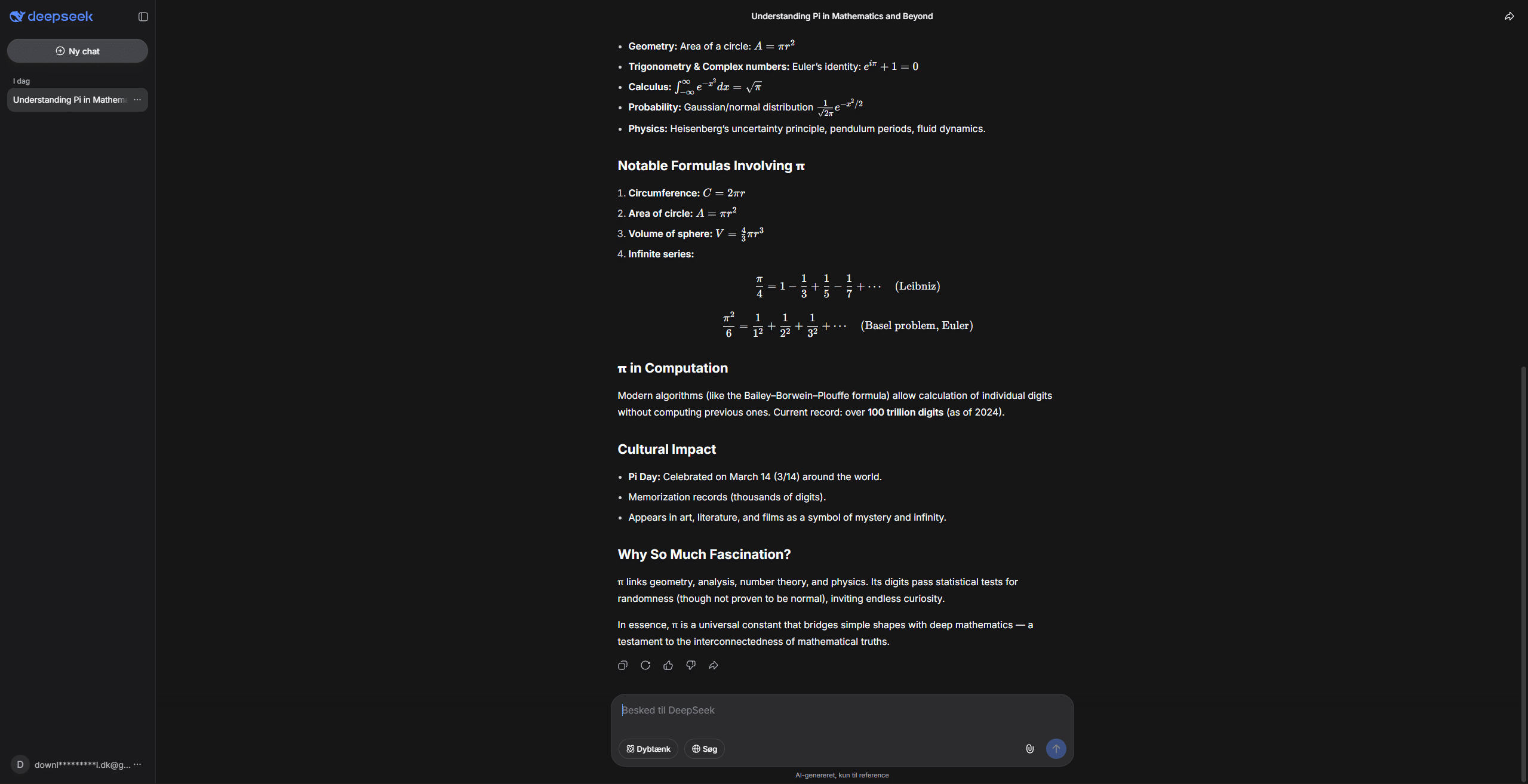
We tested DeepSeek directly in a browser in the United States to see how strong it really is and whether it can serve as a serious alternative to Western AI models.
You’ll need a Gmail or similar international email address to register and access DeepSeek. Be aware that the verification code may land in your spam folder—that’s what happened during our test. Otherwise, sign-up was easy, free, and smooth.
What is DeepSeek AI?
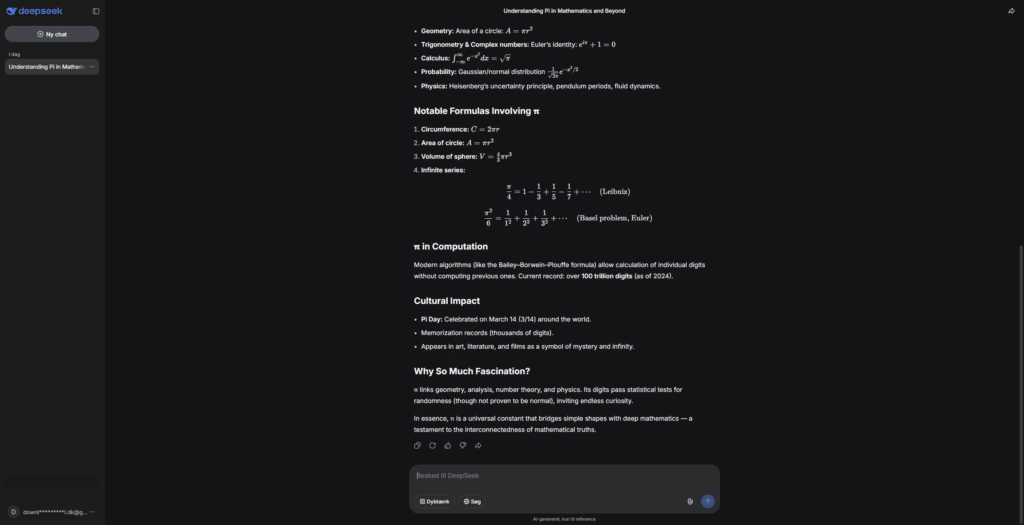
DeepSeek is a generative AI that can:
- answer questions
- explain complex topics
- help with code and logic
- generate text and analyses
The focus is on efficiency and technical precision, and the model clearly targets users working with data, programming, and technical problem‑solving—more than creative writing and small talk.
In practice, DeepSeek feels more “tight” and fact‑driven than ChatGPT, but also less hand‑holding.
Our hands-on test of DeepSeek
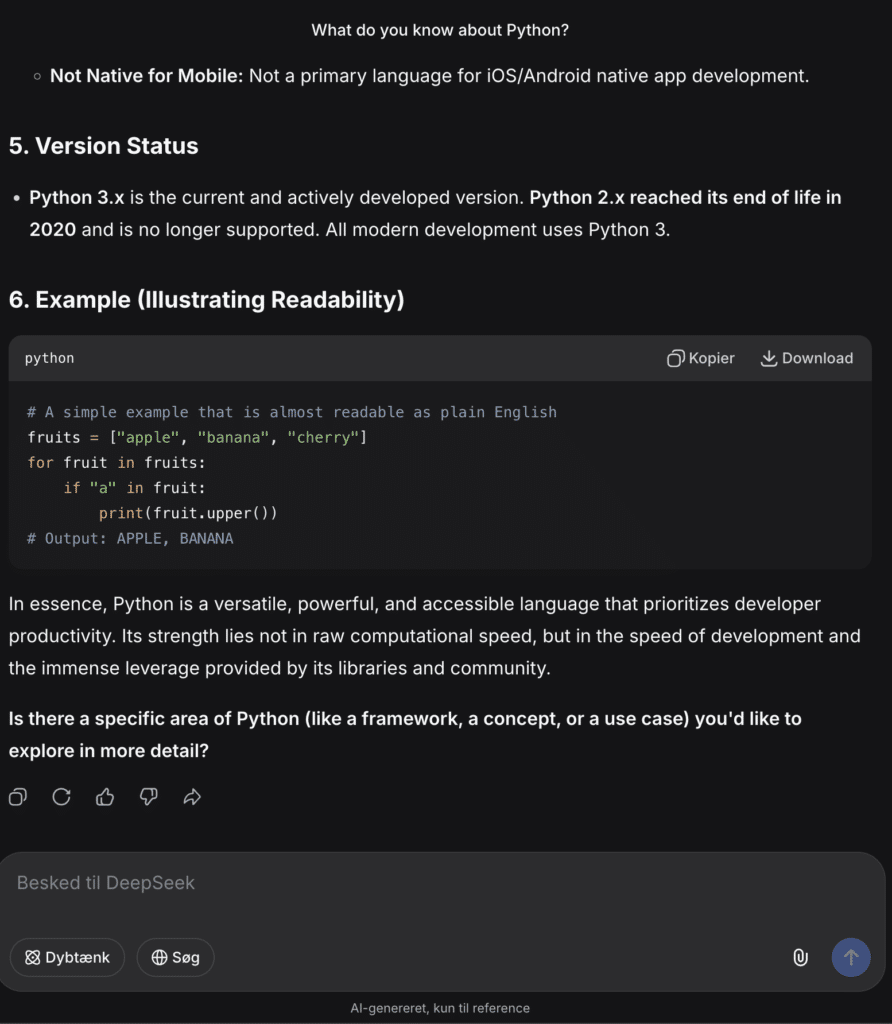
We tested DeepSeek on a standard Windows 11 PC via a browser without a VPN. Access was straightforward, and response times were fast—even for more complex prompts.
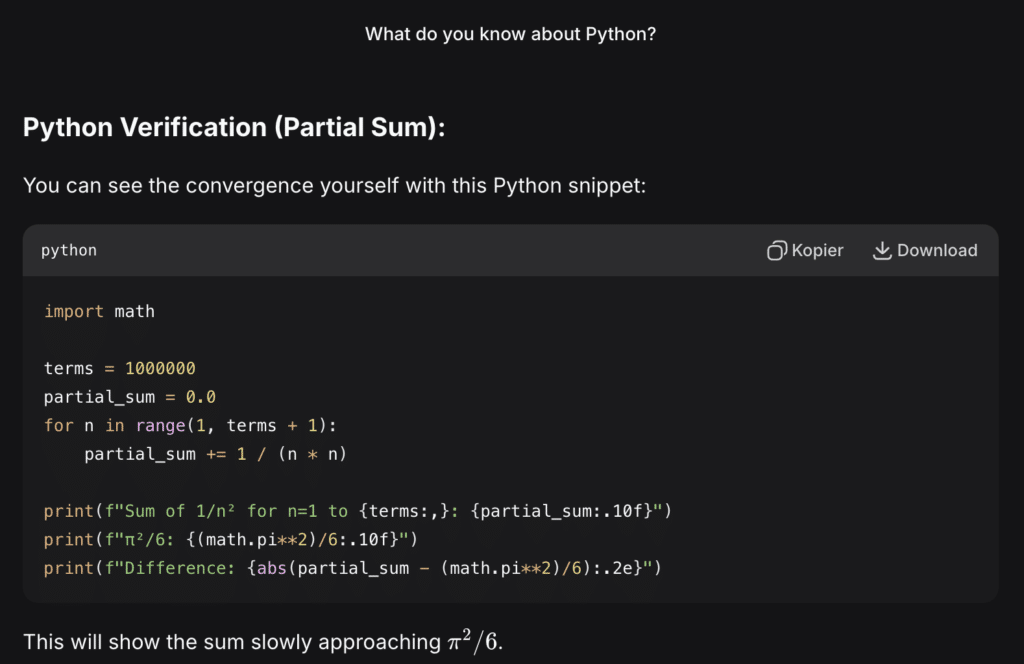
For code‑related questions (Python, logic, and mathematical explanations), DeepSeek delivered surprisingly strong and precise answers. However, responses were often shorter and less explanatory than ChatGPT’s.
There are clear limitations around certain topics, especially politically sensitive or society‑related questions. DeepSeek filters these more aggressively—worth keeping in mind as a U.S. user.
Ask short, technical questions
DeepSeek works best with precise, technical prompts. In our test, short and targeted questions produced much better answers than long explanations.
Use DeepSeek for programming
The AI is particularly strong with code, algorithms, and logic problems. We saw better structure in its answers than with several Western alternatives.
Explicitly ask for more detail
By default, DeepSeek answers very briefly. If you want step‑by‑step explanations, ask for them explicitly in your prompt.
Avoid personal information
Don’t enter sensitive data. DeepSeek is developed outside the U.S., so use it for general and technical tasks.
Combine it with ChatGPT
DeepSeek works best as a complement. Use it for technical work and ChatGPT for explanations, prose, and creative content.
DeepSeek vs ChatGPT – what’s the difference?

The biggest difference isn’t just the technology, but the philosophy behind it.
ChatGPT:
- more conversational
- better for step‑by‑step teaching
- stronger for creative writing
DeepSeek:
- more technical and direct
- excellent at code, math, and structure
- less “chatty,” more machine‑like
For developers and analytical tasks, DeepSeek can be a real alternative. For everyday writing and general use, ChatGPT is still more accessible.
Privacy, data, and use in the United States
As a U.S. user, note that DeepSeek is developed and operated in China. That means the service is subject to different data laws than in the U.S., and there is less transparency about how data is handled and stored.
During our review, we found only limited documentation on compliance with U.S. privacy regulations (e.g., CCPA/CPRA) or enterprise security standards. We therefore don’t recommend entering personal or sensitive information—use it primarily as a technical tool for general tasks, tests, and experiments.
Who is DeepSeek for?
DeepSeek is especially suited for developers, technically inclined users, and students working with IT, programming, or mathematics. It’s also a compelling tool for AI‑curious users who want to try something different from the established Western AI models.
However, DeepSeek isn’t yet the obvious choice for everyday office work, long‑form text, or creative writing. In our testing, more established alternatives were still easier to work with for those tasks.