
 Martin Jørgensen
There’s something idyllic and thrilling about the colonial era. A time when people could leave their dreary farms in their homelands and seek their fortune far from home in a brand-new world. A dangerous world full of opportunity—but also peril. Not everyone survived.
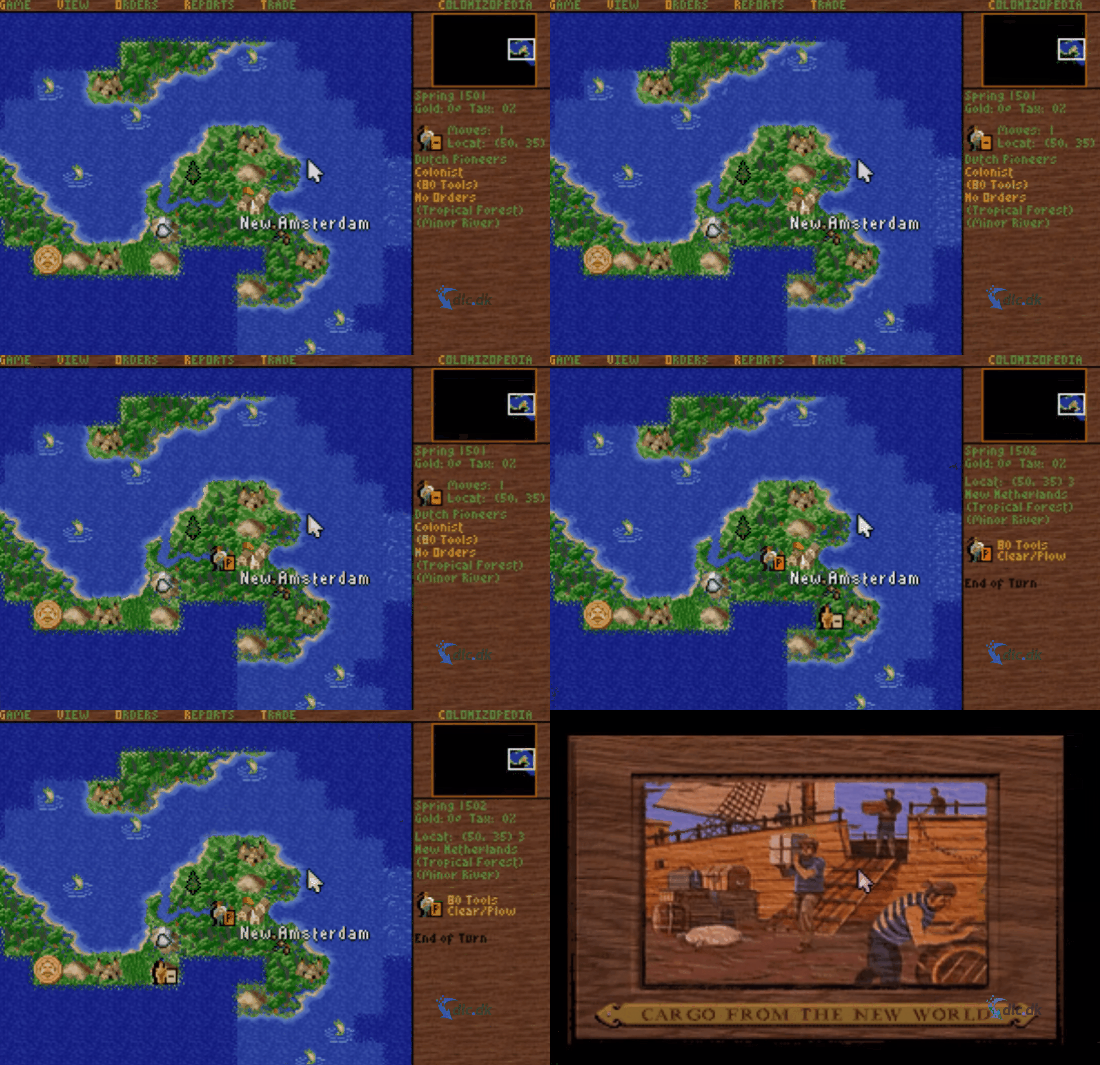
Sid Meier’s Colonization (by Sid Meier and Brian Reynolds) is a turn-based strategy game that puts you at the head of a European nation’s colonists. Your task is to found a brand-new colony in the New World, watch it grow powerful, and ultimately declare your own independence. Do you have what it takes to be governor?
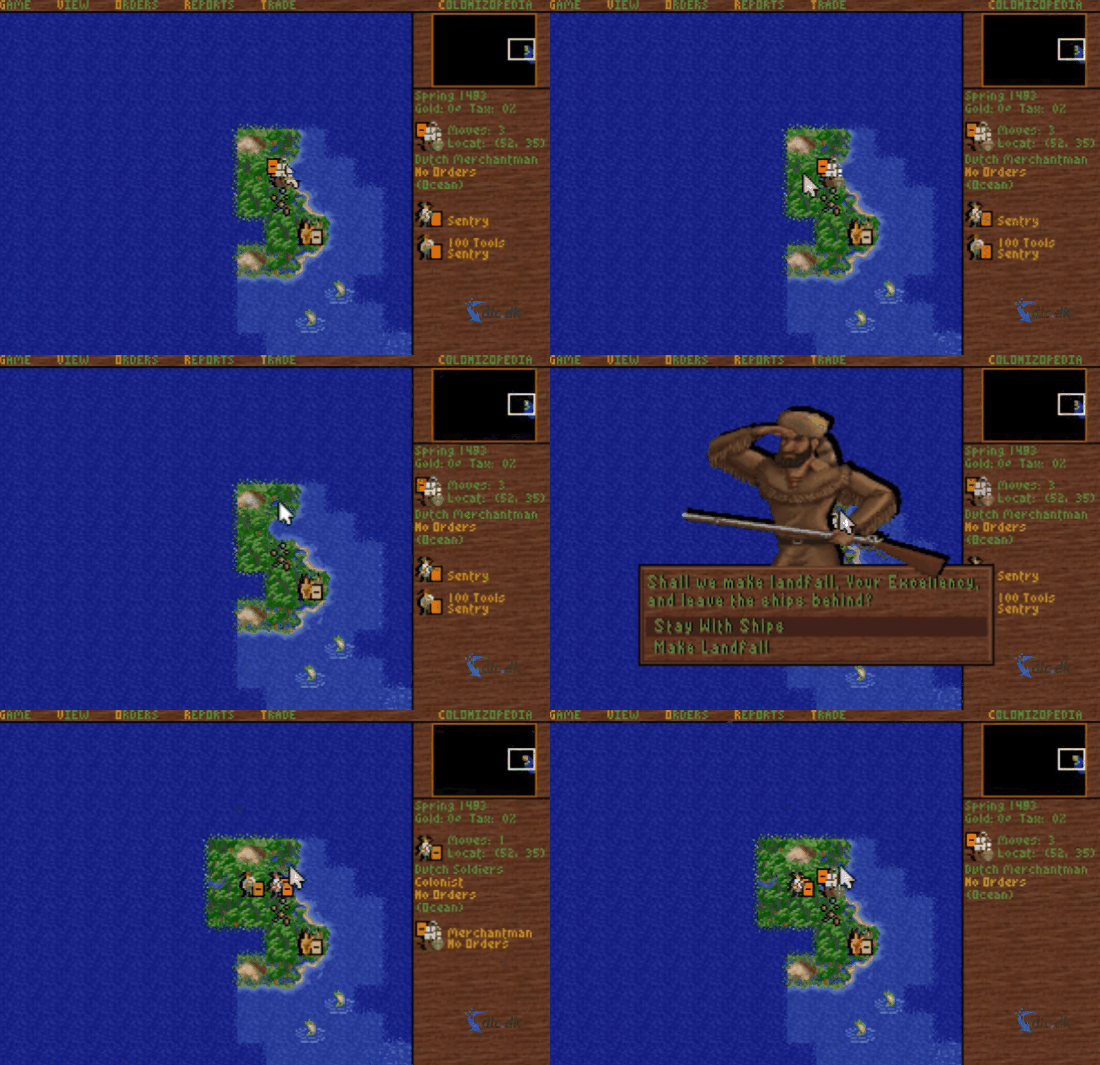
Make landfall on the New World’s mysterious and exciting shores
As mentioned, your mission in Sid Meier’s Colonization is to establish a colony and see it flourish. First, you choose which colonial power you will represent. You have four options: England, France, the Netherlands, and Spain. These four powers represent the major colonizers that managed to subjugate large parts of the world through the ages.
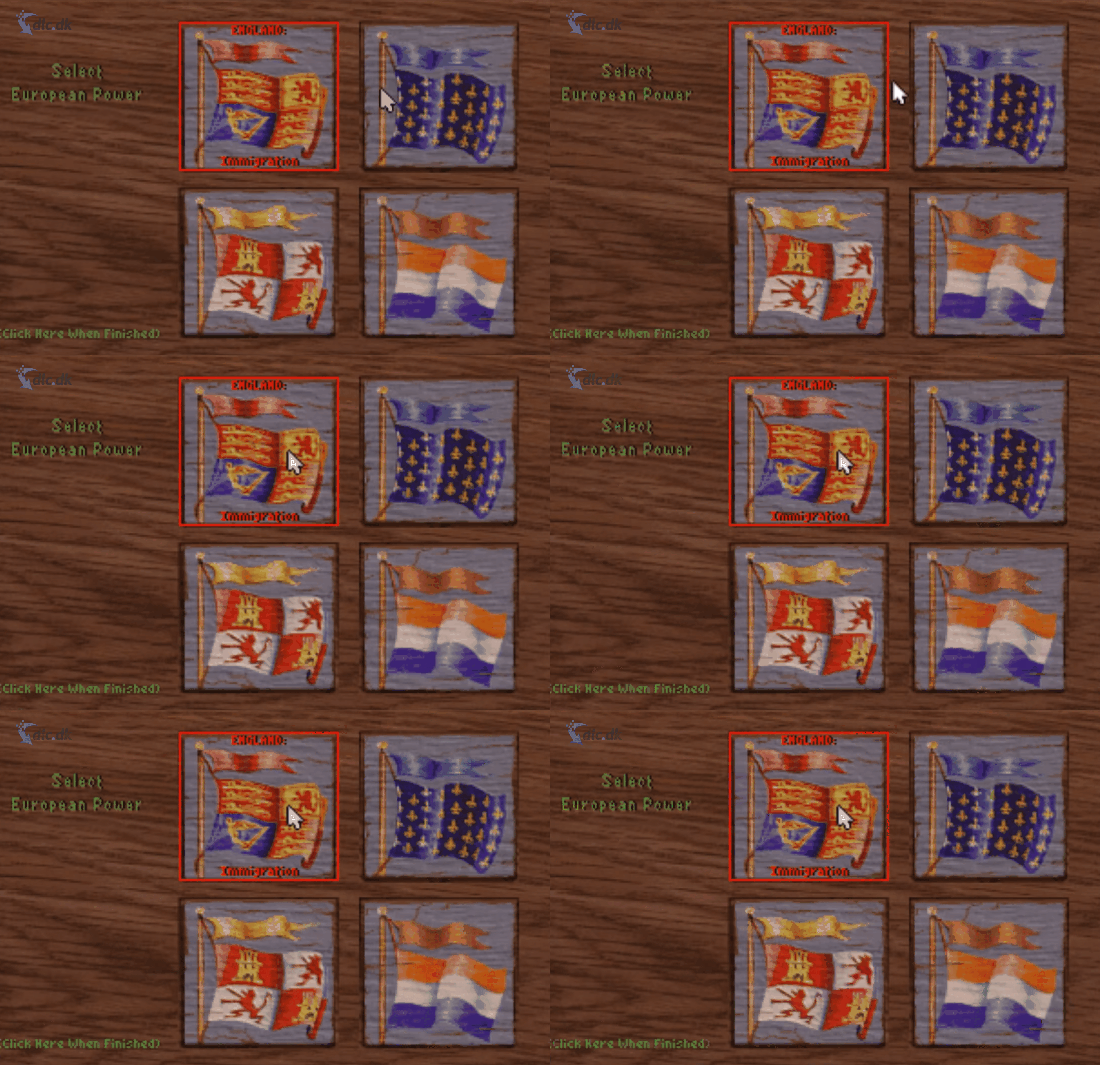
Choosing each nation provides different bonuses that make certain strategies more attractive in the long run. The Netherlands offers economic advantages (your trade routes, for example, are much more lucrative), France is optimal for diplomacy with the Native Americans (having many native villages on your side gives you more labor, etc.), Spain is for those who want to conquer, and England focuses on immigration by attracting more colonists.
Create your own world
After choosing your colonial power, it’s also time to choose your New World. You can go the standard route and pick “America”. There you can spread out across both North and South America as your colonies grow.
You can also click “New World”. This gives you a randomly generated world where you have no idea what it will look like. It adds fun and authenticity, because the colonists of the time didn’t know what they were sailing into either.
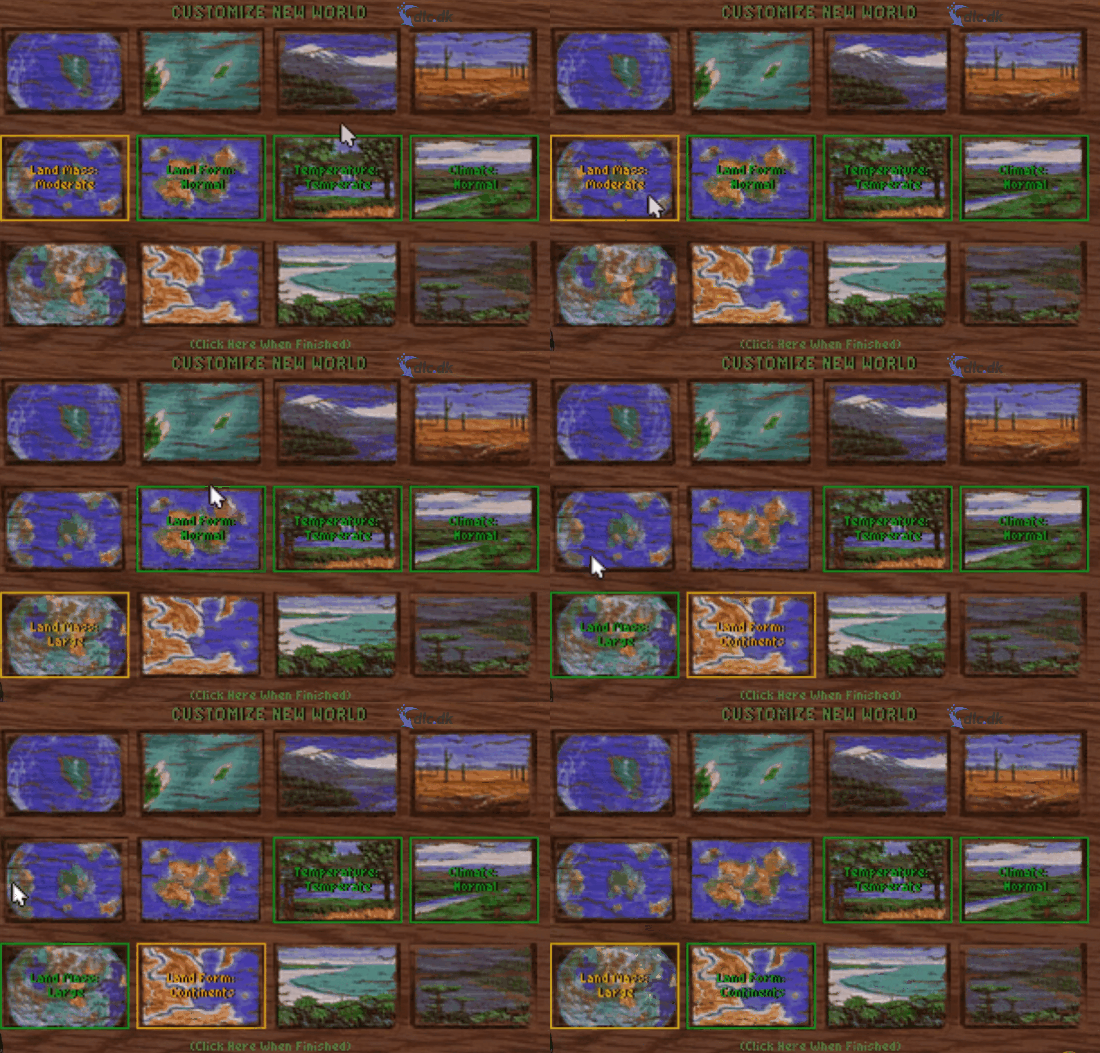
That feeling is captured here. It truly gives meaning to the words “Discover and Explore”, which helped create the idyllic image of the New World as we know it today.
You can also create your own world from scratch. That way, you can shape it exactly as you want—either to give yourself an advantage in terms of colony placement or to make things tougher. It lets you fine-tune the challenge level.
The Native Americans: threat or advantage
Once you’ve chosen your colonial power and the world you’ll make landfall in, it’s time to get your colony on its feet as quickly as possible. You’re always surrounded by dangerous and unfriendly conditions that can topple your colony at any time. So it’s vital to understand the dangers you may face in the New World.
One of the biggest threats is, of course, the local tribes. You need to decide quickly how to approach them. If you chose France, it’s best to engage in peaceful, diplomatic negotiations. This can be a major advantage, as the natives can teach you to grow tobacco, which you can sell back in Europe for good money. It also makes it easier to missionize in their villages. Natives who convert to Christianity can move into your colony as extra labor.
But if you land somewhere like South America and encounter the Aztecs, diplomacy won’t get you far. They will almost certainly wage war on you, so stay alert. Fortunately, the natives aren’t very strong at the start—they lack horses and firearms—so you have an early advantage. Over time, however, they can acquire these through trade and combat, so act fast!
If you set up your colony on native “burial grounds”, war will break out immediately. Keep that in mind.
Manage your citizens and streamline the work
Once you’ve set up your colony—ideally somewhere rich in primary resources like fish, timber, and fertile soil—it’s time to organize your workforce. Time is critical to survival, so making sure your citizens work in the right place can make a huge difference.
You’ll encounter four different types of citizens in your game, each with its own playstyle. The first and most common type is the Free Colonist. Free Colonists can take any job. Over time they will specialize and perform that job better. You can also send Free Colonists to native villages to learn other skills such as tobacco farming.
The second is “The Indentured Servant”, a step down from the Free Colonist. These servants are best suited to jobs that don’t require advanced skills. They can also do other jobs, but they’re not as efficient. They’re great for micromanaging and plugging manpower gaps when you don’t have better options.
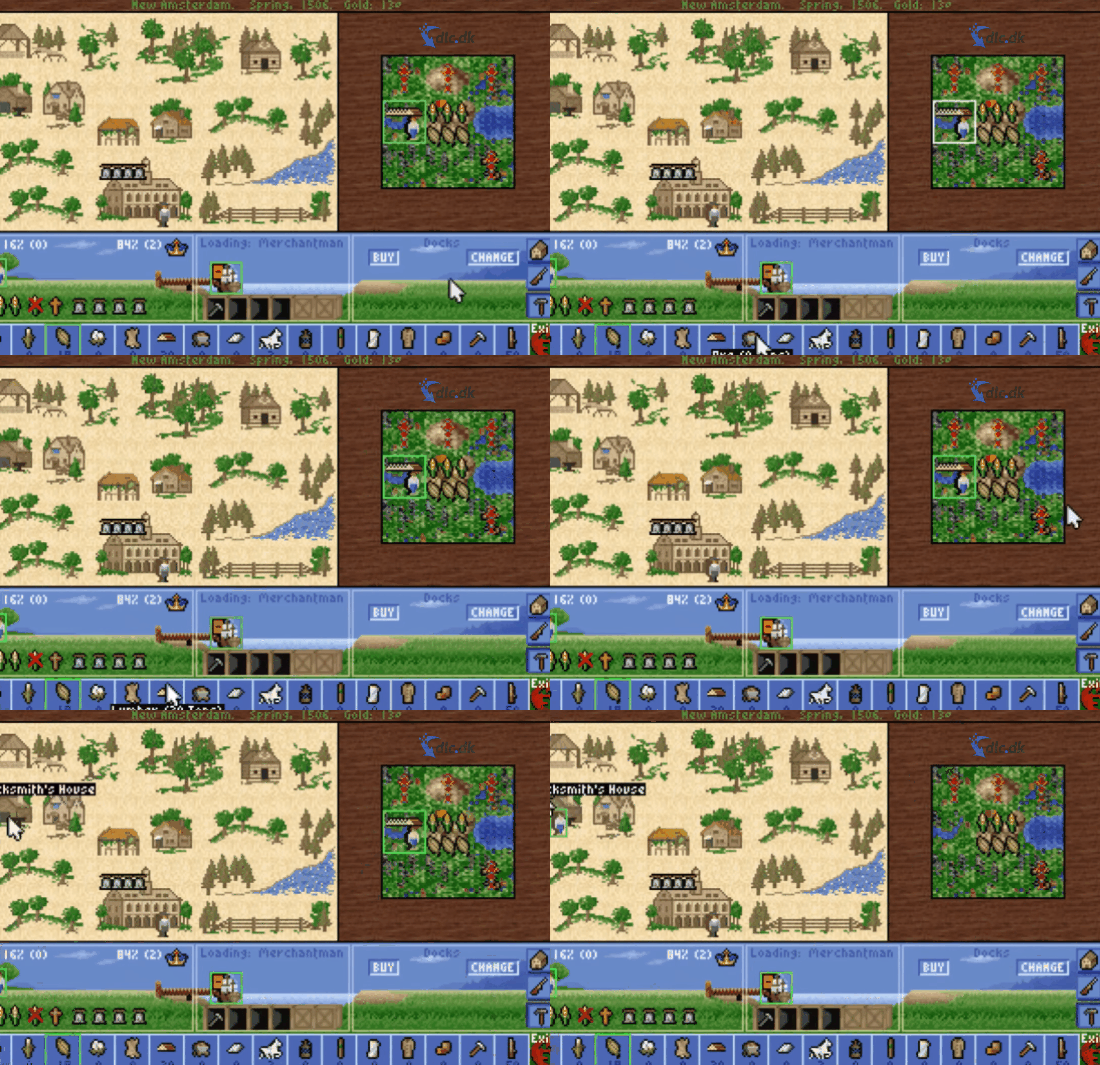
The third group is Criminals. Criminals can only be used for unskilled work. They also can’t be sent to native villages as diplomats. They’re typically best suited as soldiers in your early militia. But beware! They also have the highest “rebel sentiment”, so be careful about arming them and using too many in the military.
The fourth group is natives who have converted to Christianity and moved to your colony. They work like Free Colonists and can give your population a solid boost when you’re short on labor.
Handle a complex and challenging economy
Sid Meier’s Colonization implements a deep game mechanic in the form of its economy. A successful colony also needs a strong economy. It makes your settlement far more attractive to new colonists and lets you invest in more and better weapons. You’ll need them when you declare independence from your homeland.
The economy in Sid Meier’s Colonization focuses mainly on what are called “trade goods” and “raw materials”. They come in many forms such as tobacco, cotton, fish, lumber, and more. All are goods you can produce in your colony that are in demand back in Europe—and among the natives, who often want to buy weapons and horses (but be careful with that!).
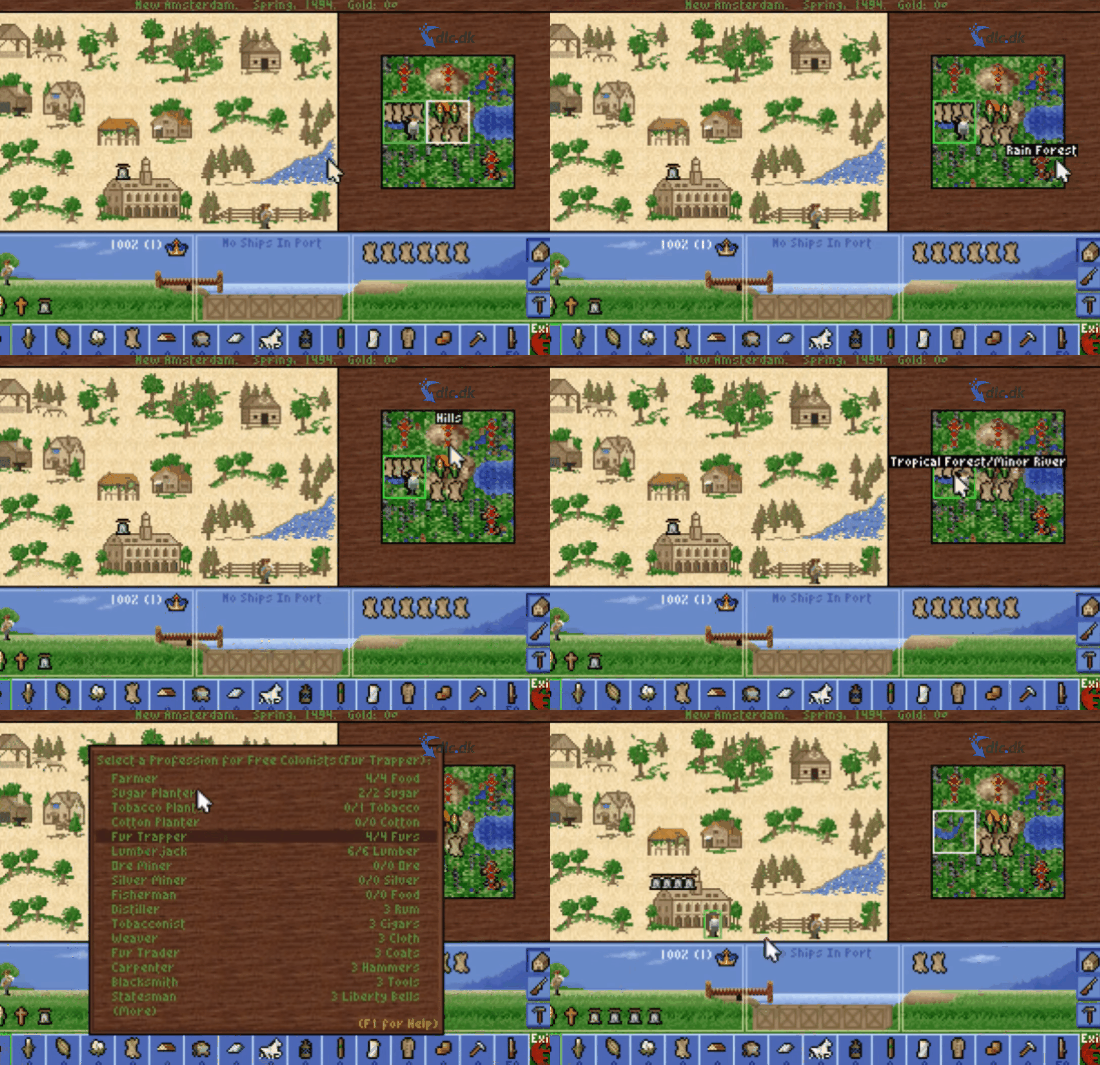
Prices can vary greatly for many reasons. One factor is, of course, supply and demand. If England doesn’t need tobacco, prices will be low. But if the Spanish are short, prices will be higher. However, be careful selling to a colonial power that isn’t your homeland (your mother country won’t like it and can sanction you).
Declare your own independence and win the game
The end goal of the game—and the condition for winning—is to declare independence from the mother country. When you reach the point where this is possible, you can be proud. Not only did your colony survive, it also prospered and expanded: it has the qualities to become its own country.
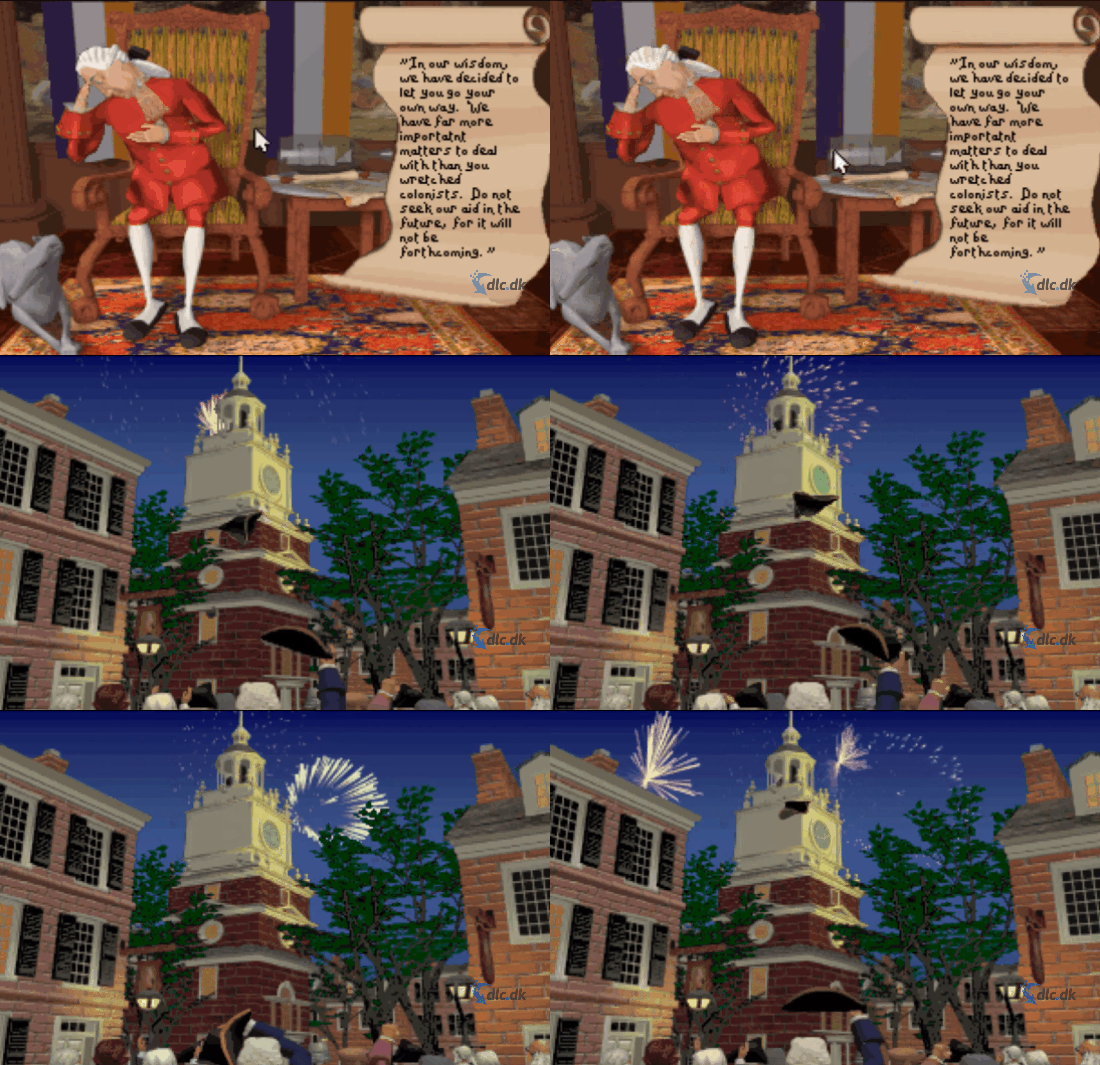
But now the hard part begins. The mother country will send a large force of soldiers to fight you, much like the American War of Independence. Therefore, you must ensure your defenses are strong and ready for the great challenge. These aren’t natives—they’re professional soldiers.
Once you have declared independence, you can no longer import weapons and other goods from abroad. It’s crucial to be more than self-sufficient in materials and raw goods, and to produce your own weapons.
For those who love historical strategy games
Sid Meier’s Colonization was released in 1994 and delivers what many strategy games have lost these days: immersion. Sid Meier’s Colonization opens up a sea of different facets when it comes to strategy: politics, management, economy, and war.
If you like to stretch your brain and make calculated, well-thought-out moves, this game is undoubtedly for you. Every little thing you do will, to some extent, affect how you come out on the other side.
The period the game takes place in is also turbulent and exciting, and has rarely been explored by the games industry since. Many features and themes can also be found in the Tropico series despite the very different time periods.
The unique classic touch many of us remember
Sid Meier’s Colonization taps into the unique feeling many of us get when we play older games: nostalgia. Nostalgia is the strongest force that often lures us back to older titles despite their shortcomings compared to modern games.
It’s a reminder of the time when we were kids with all the free time in the world. The free time to immerse yourself in a colony simulator and conquer the New World.
It’s not a feeling you encounter many places, and therefore it’s worth its weight in gold. If you want a slice of that childhood cake, Sid Meier’s Colonization is without a doubt the game to pick up again.
The simple yet charming design you know from 90s games
Sid Meier’s Colonization is at once both oddly ugly and also beautiful. What does that mean?
First and foremost, remember the game was released in 1994. From today in 2019, that’s 25 years ago. Back then, technology wasn’t advanced enough to create the fantastically beautiful graphics we know from games like Crysis, Mass Effect and the like. Therefore, a game like Sid Meier’s Colonization is built with simple, chunky pixels that only roughly depict how things look.
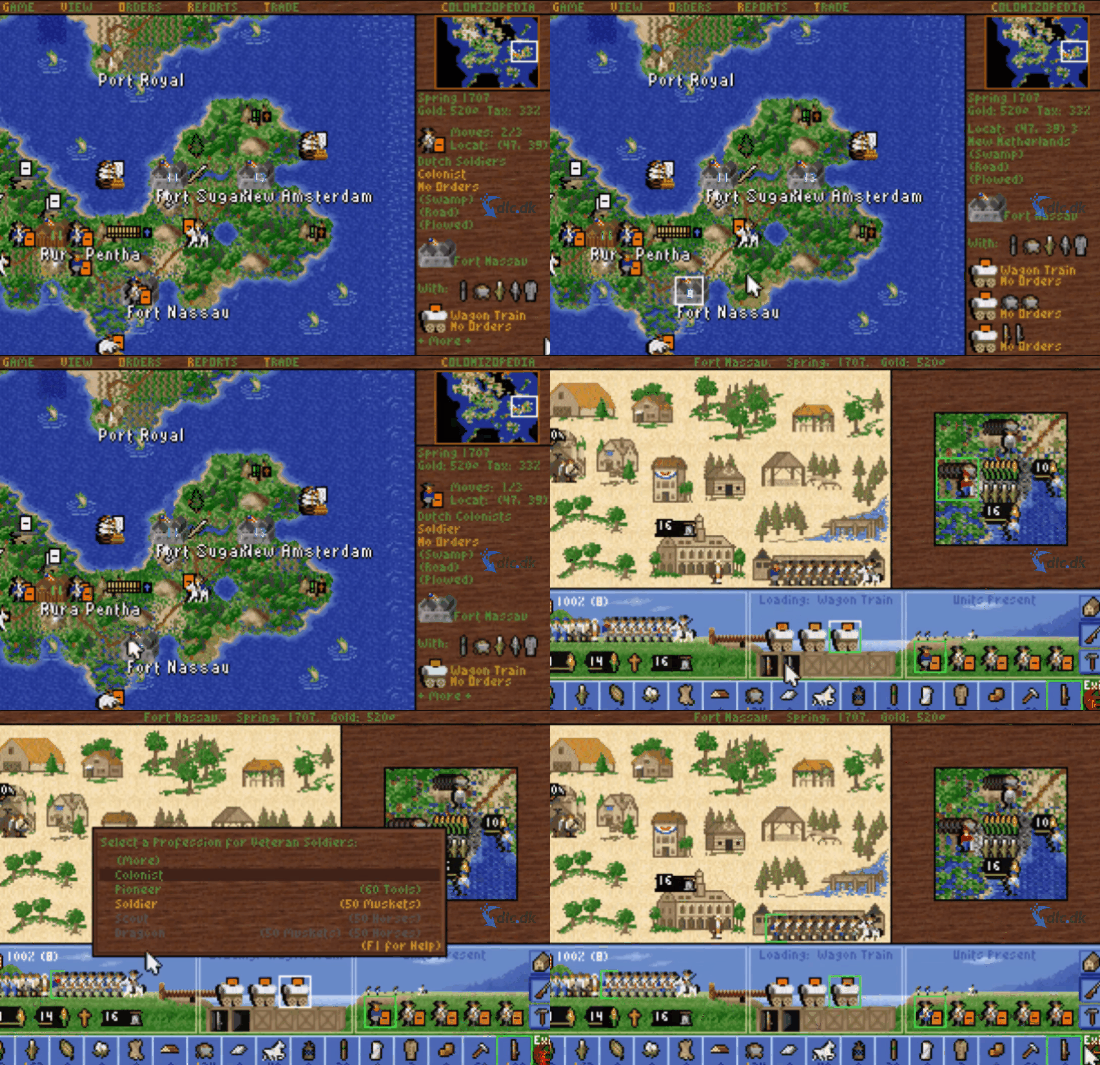
But Sid Meier’s Colonization wasn’t conceived with graphics as its selling point. Few computer games of that era were, because it simply wasn’t possible. Instead, the game boasts incredibly fun, exciting, and challenging mechanics that really get you on the edge of your seat.
The game is also beautiful in its own way, mostly thanks to nostalgia. The graphics felt more impressive at the time—we didn’t know any different.
The overall interface isn’t very refined. The whole concept revolves around navigating a lot of different menus, which takes time to memorize and learn to move through effectively. But once it clicks, it’s great fun—you even feel a bit professional.
Alternative games
Sid Meier’s Colonization is a really entertaining game, but there are so many others it would be a shame not to try.
Ports of Call is a trading simulator and one of the few that deals with large cargo ships. Here you’re put in charge of a freight company delivering valuable goods around the world. If you’re really good, you can end up with the world’s largest merchant fleet (and the most money). The game is older like Sid Meier’s Colonization and therefore has the same charm. Ports of Call can be downloaded for free her.
Another excellent candidate is 1. SimFarm is a farming simulator from 1993 that puts you in the role of a farmer who has just bought their first plot of land and must turn it into a business. Just as Sid Meier’s Colonization focuses on crops and selling them, that’s SimFarm’s ultimate focus. Can you build the country’s largest farm? SimFarm can be downloaded for free her.
If you can’t get enough simulators, SimCity 2000 is also a must-have. SimCity 2000 puts you in the role of one of the country’s leading city architects. You must start your own city from scratch. That means building housing so people can move in, creating good opportunities for jobs so they can earn and spend money, and providing all the practical necessities in the form of water, power, roads, garbage collection, etc. SimCity 2000 can be downloaded for free her.
Conclusion
Sid Meier’s Colonization is a fantastic strategy and simulationsspil. With its many different gameplay elements and facets, you can influence every front of your colony. There are many hours of fun and ample opportunity to replay the game as different colonial powers. If you’re into retro and strategy games, it’s highly recommended.
Download and play Sid Meier’s Colonization for free here
Download Colonization