 Martin Jørgensen
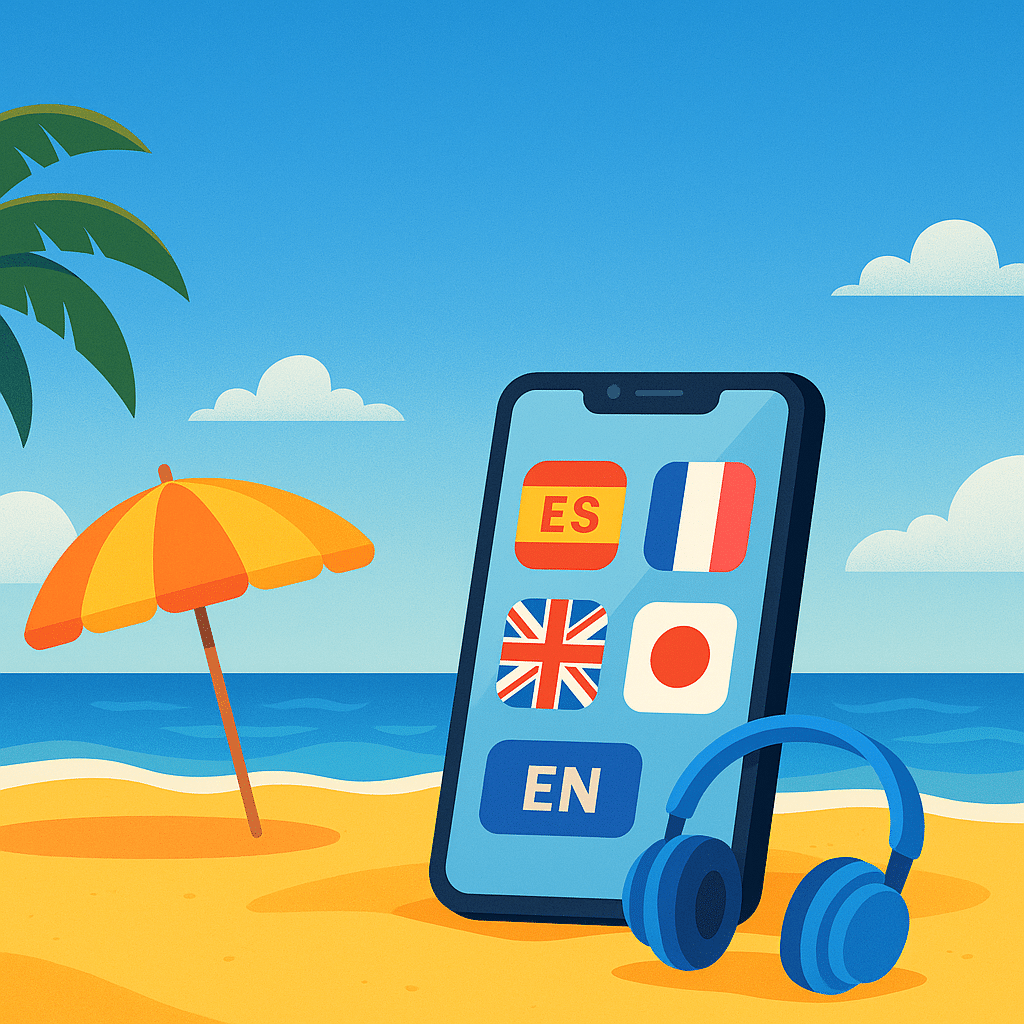
Want to spend your vacation getting better at Spanish, French, or Japanese—without it feeling like homework? Then language-learning apps are a brilliant solution. With the right apps, you can easily pick up new vocabulary in the sun, whether you’re lying on the beach or sitting on the plane. And the best part? Many of them work offline and won’t cost you a dime.
We’ve gathered the best free language apps that are user-friendly, motivating, and work great on the go.
Duolingo – The world’s most popular language app
Why choose it: Duolingo is easy to get started with, feels like a game, and works offline if you download lessons in advance.
Supported languages: English, Spanish, French, German, Italian, Japanese, Korean, and many more
Pros: Danish as a base language, reminders, gamification
Offline support: Yes, with downloads
Mondly – Learn practical phrases fast
Why choose it: Focus on conversation, pronunciation, and everyday phrases—perfect for travel and vacation spots.
Supported languages: 30+ languages including Spanish, German, French, Portuguese
Pros: Speech recognition, daily practice
Offline support: Yes, for selected features
Drops – Learn words visually and in small doses
Why choose it: Just 5 minutes a day—with plenty of images and interaction. It’s like a vocabulary memory game.
Supported languages: 40+ languages including Icelandic, Vietnamese, and Esperanto
Pros: Offline, visual learning, no grammar
Offline support: Yes
Memrise – Learn with videos and native pronunciation
Why choose it: Authentic video clips from native speakers. Great for pronunciation and everyday use.
Supported languages: 20+ languages including Spanish, Korean, Arabic
Pros: Authentic pronunciation, offline, quizzes
Offline support: Yes
How to get the most out of apps on vacation
- 📲 Download lessons at home if you’ll be offline
- 🎧 Use headphones, especially for pronunciation practice
- 🌞 Practice 5–10 minutes every day—it works better than one long session
- 📶 Airplane mode + apps = calm and focus
Top 10 tips for language practice on vacation
1. Use your phone to create mini phrasebooks
Create small phrase lists in Notes or Google Keep with the most important expressions for restaurants, transport, and polite phrases. It’s fast and works offline.
2. Use image search to understand context
If you don’t understand a word, Google Image Search can often show the meaning visually. It works especially well for food and objects.
3. Practice in real-life situations
Order coffee, ask for directions, and buy tickets—these are perfect “live practice” moments where you get instant feedback and learn quickly from mistakes.
4. Switch your phone to the language you want to learn
It works! You learn quickly everyday words like “settings,” “power off,” and “download”—and they stick in your memory.
5. Use sentences, not single words
It’s more effective to learn “Can I get the check, please?” than just “check.” You’ll be easier to understand and sound more fluent.
6. Use the café menu as a training tool
Read the menu like a mini lesson. Guess what the words mean, look them up, and try ordering without pointing—you’ll learn new vocabulary in context fast.
7. Talk to locals who also want to learn
Often, younger locals want to practice English—so you can practice your French or Spanish while they practice their Danish or English. It’s a win-win and creates real connection.
8. Use pictures to explain yourself
If you don’t know the word for “lip balm,” show a picture. You’ll be understood and learn the word at the same time. Visual communication always works!
9. Repeat local phrases out loud
When you hear a server say something, try repeating it out loud afterward. It trains both pronunciation and memory—so the phrase sticks better.
10. Learn one phrase a day—and use it!
Decide to learn one new useful sentence every morning—and find a situation during the day to use it. It makes learning fun and motivating.