 Martin Jørgensen
Quake 4 is still a brutal sci-fi shooter with bite
Quake 4 is a dark, action-packed first-person shooter where you, as Marine Matthew Kane, are dropped straight into the war against the biomechanical Strogg.
The game continues the Quake II storyline, blending classic, fast-paced shooter action with a more cinematic single-player campaign. It’s not a modern open-world game with long dialog trees and RPG systems, but a compact, brutal, and tightly focused dose of sci-fi warfare. In our test on Windows 11 via Steam, the pace, the weapons, and the moody, Doom 3–style atmosphere still stood out.
In many ways, Quake 4 feels like a product of its time—in a good way. It’s linear, heavy, grimy, and largely free of filler. You’re sent from corridor to corridor, base to base, and battlefield to battlefield as the game steadily ramps up enemies, firepower, and body horror.
A direct sequel to Quake II
While the first Quake games are often linked with arena action and lightning-fast multiplayer, Quake 4 puts much more emphasis on story. You play as part of Rhino Squad taking part in humanity’s invasion of Stroggos—the Strogg homeworld.
That gives the game a clear military sci‑fi vibe. You’re not just fighting alone through empty halls; you’re often accompanied by other soldiers who comment on the situation and help in combat. It makes the single-player feel livelier than many older shooters, even if the AI can’t match modern games.
The game’s most famous moment is still the so‑called “stroggification.” Without spoiling too much, your character is physically altered along the way, which brings a major shift to both story and gameplay. It’s one of those scenes you remember—even after playing plenty of other shooters since.
Weapons, pace, and combat
Quake 4 packs a solid arsenal of classic sci‑fi weapons. You’ll get an assault rifle, shotgun, rocket launcher, railgun, and more—perfect fits for the series’ fast, aggressive combat style.
Fights are rarely tactical in the modern sense. It’s more about movement, precision, and reaction time. Enemies push you forward, and the game rewards staying mobile instead of hiding behind cover. This is where Quake 4 still shines: low on health, railgun in hand, a pack of Strogg in front of you.
There are also vehicle sections and larger battlefields where you pilot heavy war machines. They break up the corridor action nicely, even if they’re not the game’s strongest element. They do add variety and a sense that you’re part of a larger invasion.
Graphics and atmosphere
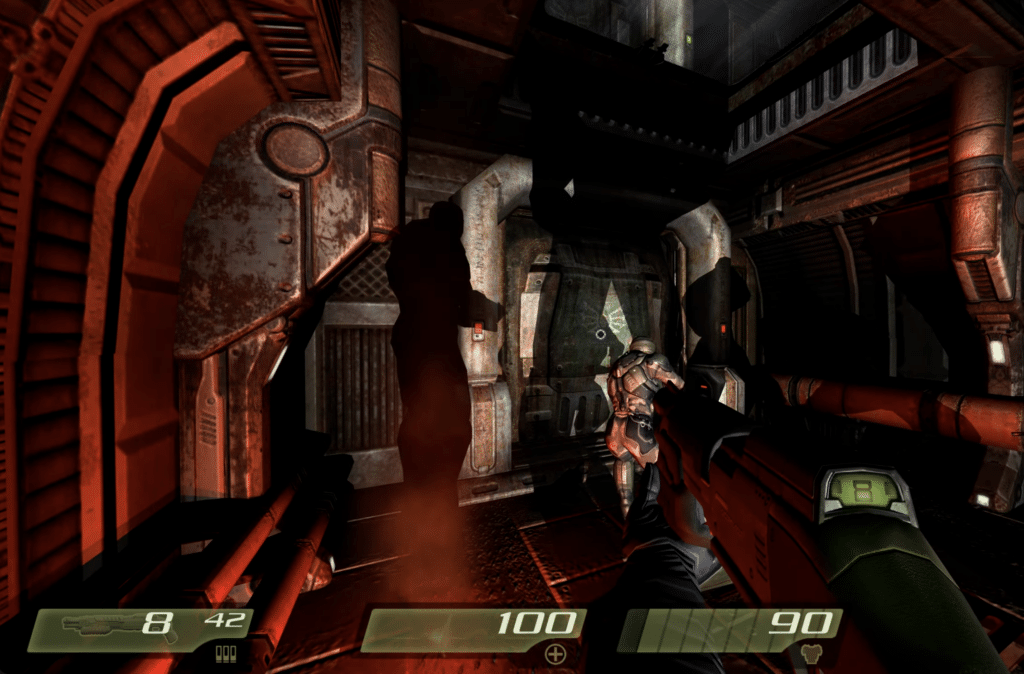
Quake 4 runs on the id Tech 4 engine, also used in Doom 3. That means dark corridors, metallic installations, heavy shadows, and a fairly claustrophobic tone. Today the graphics aren’t impressive in the same way they once were, but the dark art direction holds up better than you might expect.
In testing, the game’s industrial atmosphere really stood out. Stroggos feels cold, dirty, and hostile. There’s blood, machine parts, cables, and biomechanical detail everywhere. It’s not traditionally beautiful, but it nails Quake’s brutal vibe.
The audio is worth mentioning too. Weapons sound heavy, enemies have the right mechanized menace, and squad radio chatter adds pressure to firefights. It’s not subtle—and Quake 4 isn’t trying to be.
Multiplayer in Quake 4
Quake 4 includes multiplayer, and the Quake III Arena inspiration is obvious. The pace is high, maps are built for quick duels, and weapon control matters a lot.
That said, multiplayer isn’t the main reason most players should grab Quake 4 today. Activity is naturally far lower than in modern online shooters, and newcomers will get the most out of the single-player campaign. Still, multiplayer can be fun if you’re playing with other fans or on private servers.
How Quake 4 feels on a modern PC
On a modern Windows 11 PC, Quake 4 runs smooth and fast. It’s an older game, though, so don’t expect the same comfort as recent remasters. Resolution, widescreen, mouse feel, and certain graphics settings may need a little tweaking depending on your setup.
The Steam version is the easiest way in for most players because it installs straight from your library. The GOG version may appeal if you prefer DRM‑free games. Both options make far more sense than hunting for old, unofficial downloads around the web.
Quake 4 isn’t free, and it’s not freeware or abandonware. It’s still a commercial game and should be purchased from an official store.
Top 5 tips for Quake 4
Keep moving
Quake 4 punishes standing still. Strafe, jump, and take short peeks from cover—but don’t play it like a modern cover shooter. The game feels best when you keep the pace up.
Swap weapons based on enemy type
The shotgun dominates up close, while the railgun and rocket launcher excel against tougher foes. Learn each weapon’s rhythm—ammo runs out faster than you think.
Check corners and side paths
Even though Quake 4 is linear, you’ll often find extra ammo, health, and armor in small detours. A few seconds of searching can make the next fights much easier.
Tweak resolution and mouse before you start
On newer displays, the game may need a bit of tuning to feel right. Spend a couple of minutes on graphics settings and mouse sensitivity before you dive into the campaign.
Play it for the single-player campaign
Multiplayer still has nostalgic value, but Quake 4 is strongest as a compact single-player shooter. Treat it like a dark sci‑fi campaign, not a modern live-service game.