 Martin Jørgensen
Babbel – learn languages effectively with Danish as your instruction language
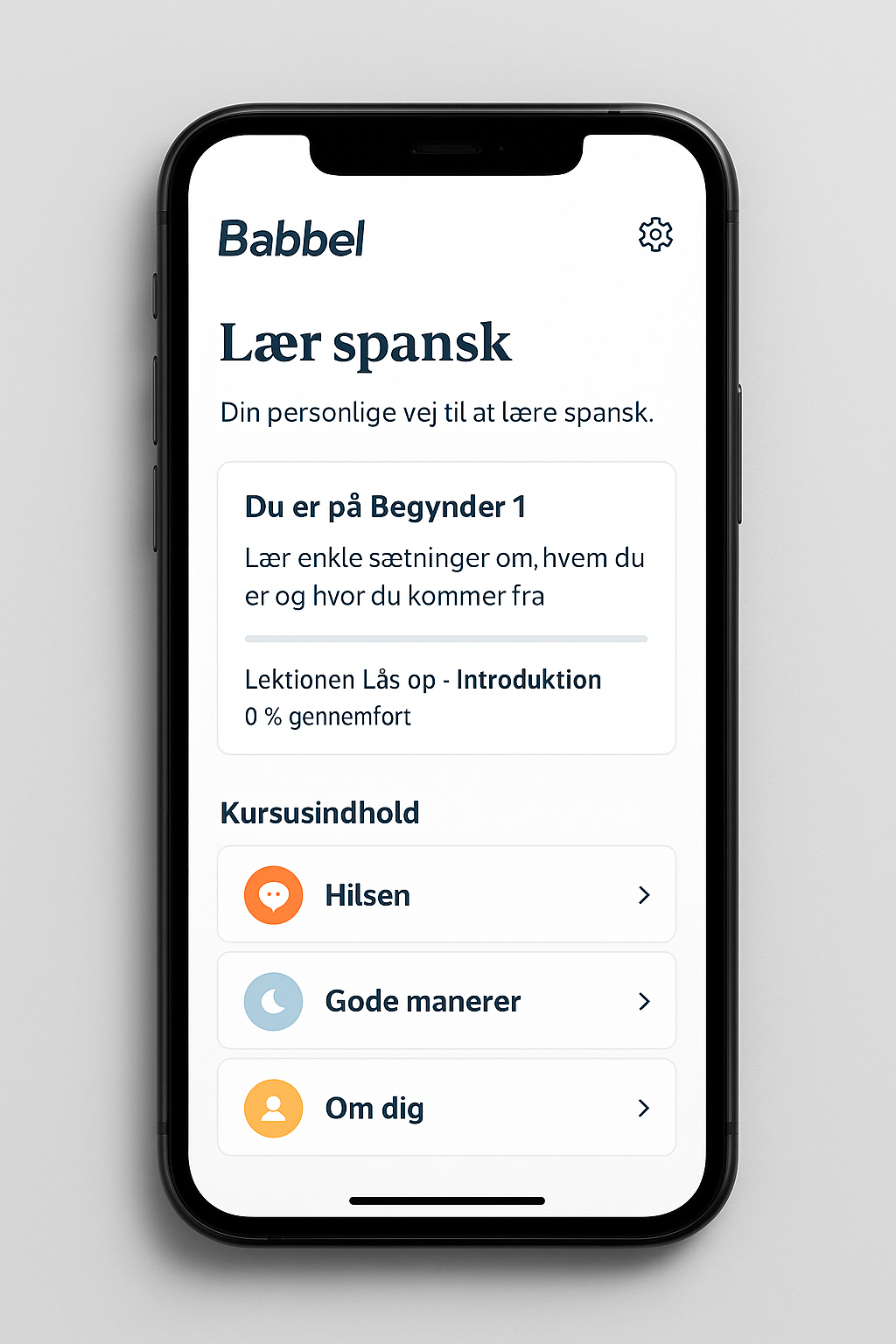
Babbel is a popular language app that combines structured lessons with user-friendly technology. Unlike many other platforms, Babbel offers courses where you can use Danish as the language of instruction—for example, to learn Spanish or German without relying on English. If you’re a Danish speaker who prefers not to use English, this makes the app especially appealing when you’re searching for a “language app without English.”
Learning method and structure
Babbel builds its courses on linguistic research with a focus on practical, everyday conversation. This makes the app especially good for adult learners who want to use the language in real-life situations. The lessons are modular, and you can choose themes such as “travel,” “work,” and “culture.”
The app includes:
- Interactive exercises
- Listening and speaking practice
- Reading and clear grammar explanations
- A personalized learning plan
You can try Babbel for free, but a paid subscription is required for full access.
Danish as the language of instruction
The most interesting thing for Danish speakers is that Babbel is continually expanding its support for Danish as a base language. At the moment, you can learn languages like Spanish, German, and Italian from Danish. That makes it especially relevant if you’re looking for “learn Spanish with a Danish app” or “app to learn German without English.”
Compared with Duolingo and Mondly
Babbel differs from Duolingo by offering more structured and grammatically accurate instruction. It isn’t as game-like as Duolingo, but it’s better at building correct language use.
Compared with Mondly, Babbel is a bit more serious and academically grounded, but it offers fewer language choices and doesn’t include features like AR or a chatbot.
Få adgang til Babbel via producentens offcielle website her
Top five tips and tricks for Babbel – how to learn faster
1. Use the “Review Manager” for repetition and better long‑term retention
Babbel has a built‑in Review Manager that automatically collects words and phrases you’ve learned. By using it daily (or several times a week), you reactivate your memory and anchor the language more effectively. It’s one of the best ways to build vocabulary quickly and keep it.
2. Pick conversation topics right away—learn practical language first
Instead of starting with grammar drills or plural nouns, begin with themes like “at a restaurant,”“travel,” or “work.” You’ll reach basic conversational ability faster—and stay motivated.
3. Do writing exercises and learn the target language’s keyboard
Babbel lets you type your answers. Use the appropriate keyboard/layout for the language so you learn correct spelling and accent marks in context. This strengthens your writing skills and prepares you to write emails, messages, or notes in the new language.
4. Build a steady routine—small daily sessions work best
People often ask: “How much time should I spend on Babbel each day?” The answer: 10–15 minutes is plenty. Consistency matters more than length. Choose a set time—say, with your morning coffee or before bed—and make it a habit.
5. Combine Babbel with listening and video for extra impact
Use podcasts, YouTube videos, or Netflix with subtitles in the language you’re learning. This trains both pronunciation and comprehension. Babbel provides structure, and the extra input increases exposure and makes the language come alive.