 Martin Jørgensen
Mondly – learn languages with Danish as your starting point
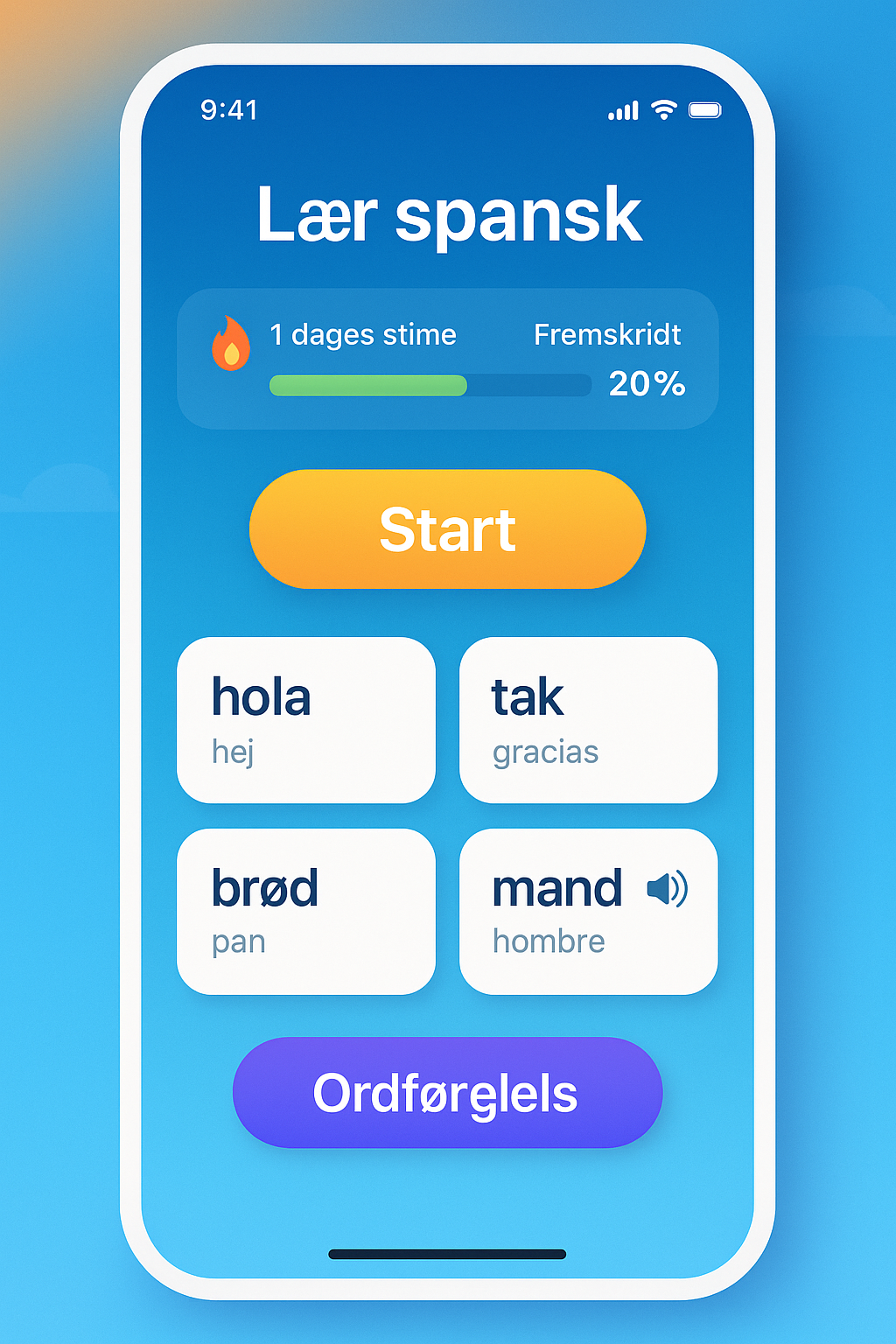
Mondly is a language app that stands out from the competition by offering Danish as both the user interface and the teaching language—making it especially attractive for Danish users who want to learn Spanish, Swedish, or German without needing English first. The app combines gamification with daily lessons, speech recognition, and useful exercises, making it ideal for both beginners and advanced learners.
Features and learning approach
Mondly offers more than 40 languages and lets you choose both your source and target language—for example, learn Spanish with Danish as your base language. It’s possible to use the app for free or with a subscription (1 Premium), which gives you access to advanced features like a chatbot, AR training, and specialized courses (for travel, business, etc.).
Each lesson is concise and lets you practice vocabulary, grammar, pronunciation, and listening comprehension. You can see your progress daily and stay motivated through points and level-ups.
Usability and design
Mondly has a modern and intuitive brugerflade in Danish, making it ideal for those who want to avoid using English as a bridge language. The app is responsive on both mobile and in the browser, and giver en god læringsoplevelse across devices.
Mondly or Duolingo?
If you’re searching for “language app without English”, Mondly wins over Duolingo. While Duolingo only offers English from Danish, Mondly lets you choose Spanish, German, Swedish, Italian, French, and many more—directly from Danish.
Duolingo does have a larger community, more free features, and more daily reminders, but Mondly is much better if Danish is your only language.
Try Mondly via their official website here
Top five tips and tricks to get the most out of your language app
1. Use the “Daily Lesson” every day—and make it a habit
The daily lesson isn’t just a random task—it’s carefully designed to give you continuous progress without losing motivation. Many apps adjust the day’s content based on your recent activity and difficulty level.
🔁 Tip: Set a fixed time of day—like with your morning coffee or after dinner—and spend 10 minutes daily. Consistent use beats long sessions once a week.
2. Enable the chatbot—practice conversation without performance anxiety
Most modern language apps now have AI-powered chatbots, where you can have realistiske samtaler. It may seem like a gimmick, but it’s actually one of the most effective tools to:
- Practice spontaneity
- Train sentence structure
- Get comfortable expressing yourself without being perfect
😌 Benefit: You’re never interrupted or judged—and you can repeat the exercises as often as you like.
3. Start with themes like “travel,” “food,” and “everyday life”
It’s tempting to start with grammar and complex sentences, but studies show it’s better to begin with words and phrases you can use quickly in real life.
✈️ Examples:
- “Where is the nearest bus?”
- “I’d like to order food without meat.”
- “How much is it?”
🎯 Tip: These themes give you quick “payoff” and help you understand local signs, menus, and small talk when you travel.
4. Use the microphone and listen actively—it dramatically improves your pronunciation
Most language apps offer speech recognition, and you shouldn’t skip this feature. When you say the words out loud, you activate both:
- Ear (listening)
- Mouth (pronunciation)
- Brain (memory)
🎧 Tip: Repeat the words 2–3 times, even if the app says it was correct the first time—especially if the accent is hard to get right.
5. Leverage the AR feature if available—learn by doing
If your app supports Augmented Reality (AR)</strong), try it! Many language apps (e.g., Mondly) let you place digital characters in your living room that you then interact with by tale til them.
🧠 It makes learning more physical, vivid, and engaging—and you remember words better when you learn them in context and in 3D.
📱 Tip: You typically need a newer Android or iPhone model to get the full AR experience.