 Martin Jørgensen
Messenger is still one of the most-used chat apps — but it's also gotten more cluttered
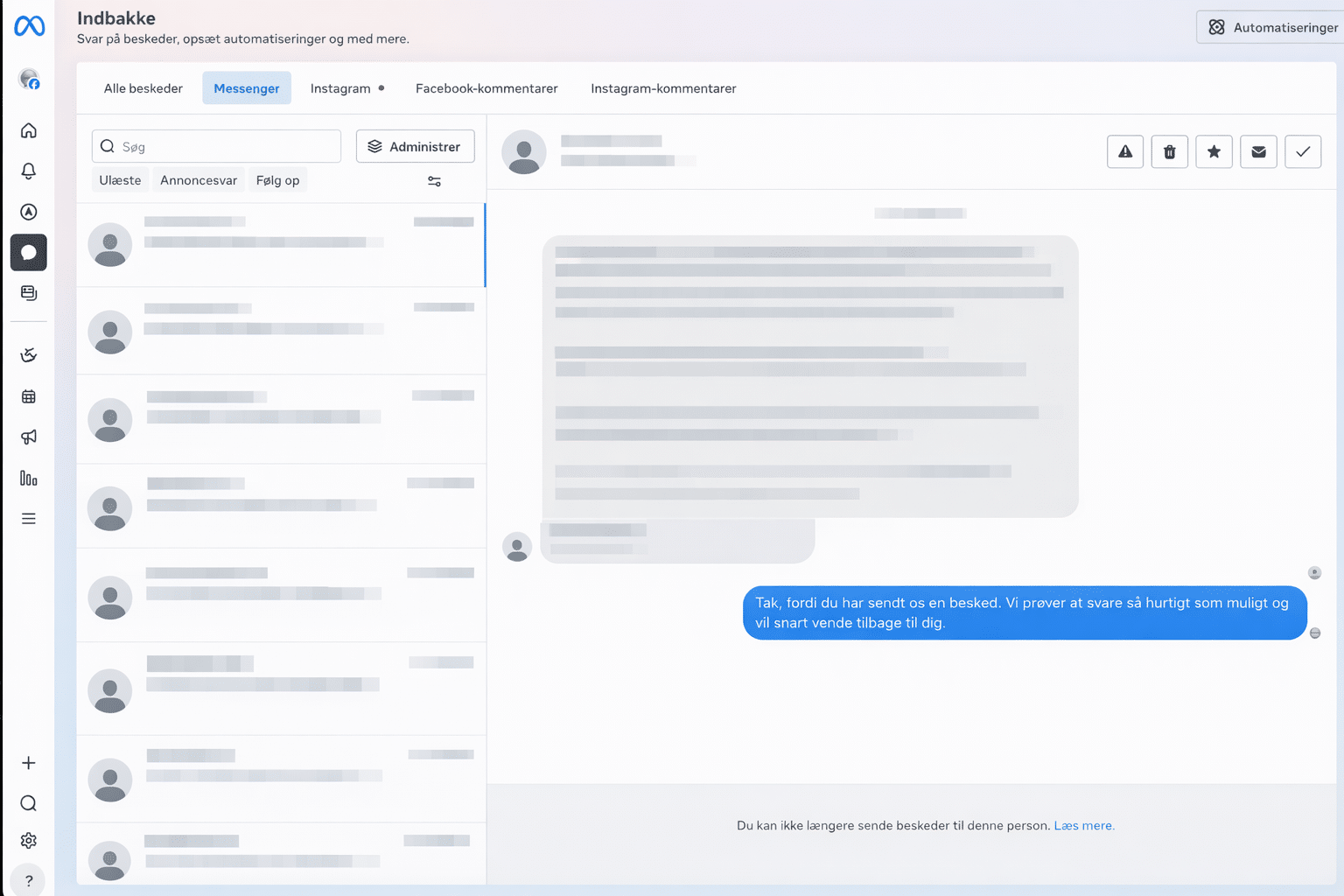
Messenger is Meta’s messaging and calling app for texts, voice, video calls, and photo sharing across mobile, desktop, and the web. We tested Messenger on both phone and computer, and the takeaway is pretty clear: the app is still extremely practical—especially if many of your friends, groups, or family members are already there. On the other hand, Messenger is no longer as simple as it used to be. Meta has steadily added features, including HD video calls, noise reduction, AI backgrounds, HD photos, message editing, and disappearing messages, which makes appen more versatile but also a bit heavier in everyday use.
What Messenger can do today
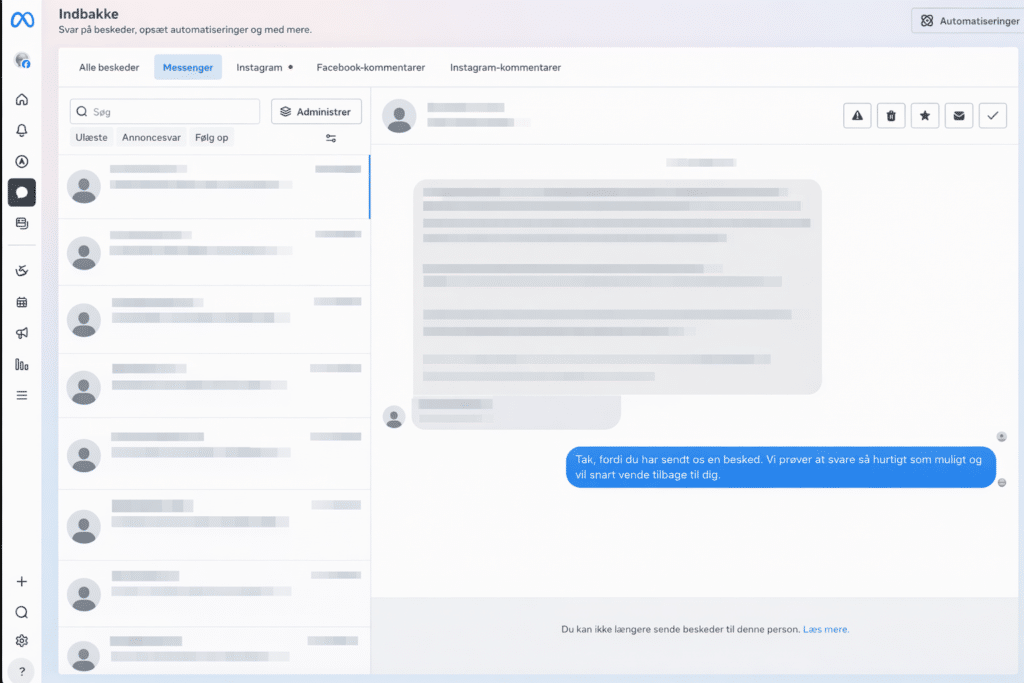
Messenger isn’t just a classic chat app anymore. Today it’s a broad communications platform with text chat, voice messages, video calls, group calls, photo sharing, communities, and desktop support. Meta describes Messenger as a free messaging app that lets you send messages and make voice and video calls, and both the App Store and Google Play also emphasize that the app works across mobile, tablet, and desktop.
In our testing, it was especially clear how strong Messenger still is for the practical, everyday stuff. It’s hurtigt at sende en besked, starte et opkald or share a photo, and because so many people already use the platform, you often avoid the usual struggle of getting people to move to yet another new app. That’s actually a bigger strength than you might think. The best messaging app is often the one people around you already reply to.
It works well in practice
Messenger still feels most at home on mobile. The app is hurtig enough, messages come in reliably, and it’s easy to jump from a regular chat to a call or a group. On desktop, the experience is also quite good—especially if you’re working and want to reply with a physical keyboard. Meta launched the desktop app with a focus on larger screens, notifications, video calls, and multitasking, and that’s still the part of the experience that works best on a computer.
We especially liked how easy Messenger is for everyday tasks. Family groups, hurtige beskeder, små opkald, deling af billeder, and short voice notes still work really well. It’s a little boring to say, but Messenger often wins on sheer habit and availability. It’s simple to reach people quickly.
Privacy and security have become more important
One of the biggest changes in recent years is that personal messages and calls on Messenger now use default end-to-end encryption. In December 2023, Meta announced the rollout of default end-to-end encryption for personal messages and calls on Messenger, and later explained that users can protect secure storage with a 6-digit PIN or a key stored in iCloud or Google Drive.
That’s a genuine improvement, and it matters for the overall assessment. Historically, Messenger hasn’t always been the app people thought of first if privacy was the top priority. Today it’s stronger on that point than before. It doesn’t automatically make it the most private app on the market, but it does make it more relevant—even for users who previously kept some distance.
New features make Messenger feel more modern
Meta hasn’t stood still. In 2024, the company announced that Messenger added HD video calls, background noise suppression, voice isolation, and AI backgrounds for calls, and the same year it also highlighted HD photos and shared albums in Messenger news. The Google Play listing also emphasizes HD photos, message editing for up to 15 minutes after sending, and disappearing messages in encrypted chats.
You can actually feel it in use. During our test, the calling experience was better than we expected, and the noise reduction and overall image quality make Messenger more competitive with other apps. It’s not revolutionary, but it’s exactly the kind of improvement that keeps people from switching.
Where Messenger gets annoying
Messenger has some weaknesses, too. The biggest is that the app no longer feels clean. There are many features, many menus, and increasingly a lot of “extras” not everyone asked for. Meta AI is mentioned directly in the Google Play listing, which some will see as a bonus, while others just want a simple messaging app without the bloat.
We also found that Messenger can still get a bit distracting if you don’t actively clean up notifications, groups, and active chats. It doesn’t ruin the app, but it’s one reason why good tips and settings matter more here than in many other reviews. Messenger is best when you take a little control over it yourself.
Who should use Messenger?
Messenger is ideal if you already have family, friends, school groups, or hobby contacts on Meta’s platforms and just want an app that works across devices. It’s also a good choice if you want to keep chat and calls in one place without having to convince your entire circle to switch apps.
Conversely, Messenger is less appealing if you want the most minimalist experience or are determined to use as little of the Meta ecosystem as possible. In those cases, some users will still prefer more streamlined alternatives.
Why Messenger is still worth downloading
Messenger isn’t necessarily the smartest or most elegant chat app anymore, but it’s still one of the most useful. It wins on network effects, broad availability, and the fact that Meta has clearly improved calling, photo sharing, and security in recent years.
Honestly, Messenger is a bit like a big family group gathered for the holidays: a little messy, a little noisy, but still hard to do without.
Top 5 tips for Messenger
Messenger quickly becomes more distracting than helpful if everything pings all day. We strongly recommend muting groups and conversations that don’t need immediate attention. It makes a surprisingly big difference and helps the app feel far more manageable.
Messenger has a very handy feature many still overlook: you can edit a sent message shortly after sending it. It’s perfect for typos, half-finished sentences, or those classic messages you fire off too quickly. In our testing, it was one of the small details that made the app nicer to use.
If you use Messenger a lot, spend a few minutes on security settings, your PIN, and key privacy choices. It’s not the most exciting part of the app, but it’s among the most practical—especially if you send many personal messages. Getting that set up early makes sense.
We tested Messenger on both mobile and desktop, and for longer conversations or many quick replies throughout the day, the desktop version is still best. Typing with a real keyboard is faster, and it’s easier to keep track of multiple chats without the same level of interruption as on mobile.
Many people use Messenger almost exclusively for chat, but calling has gotten much better. Quick video calls, short voice calls, and fast clarifications work really well—especially when you want to reach someone without switching to another app. It’s a feature that deserves more attention.