 Martin Jørgensen
Civilization II – Build your empire and rule the world.
Civilization II is a classic strategy game developed by Sid Meier and MicroProse, where you take control of a civilization and guide it from the Stone Age to the Space Age. Originally released in 1996, it’s still beloved for its depth, strategy, and limitless replay value.
1 is widely recognized today as one of the most influential turn-based strategy games ever made.
Gameplay and features
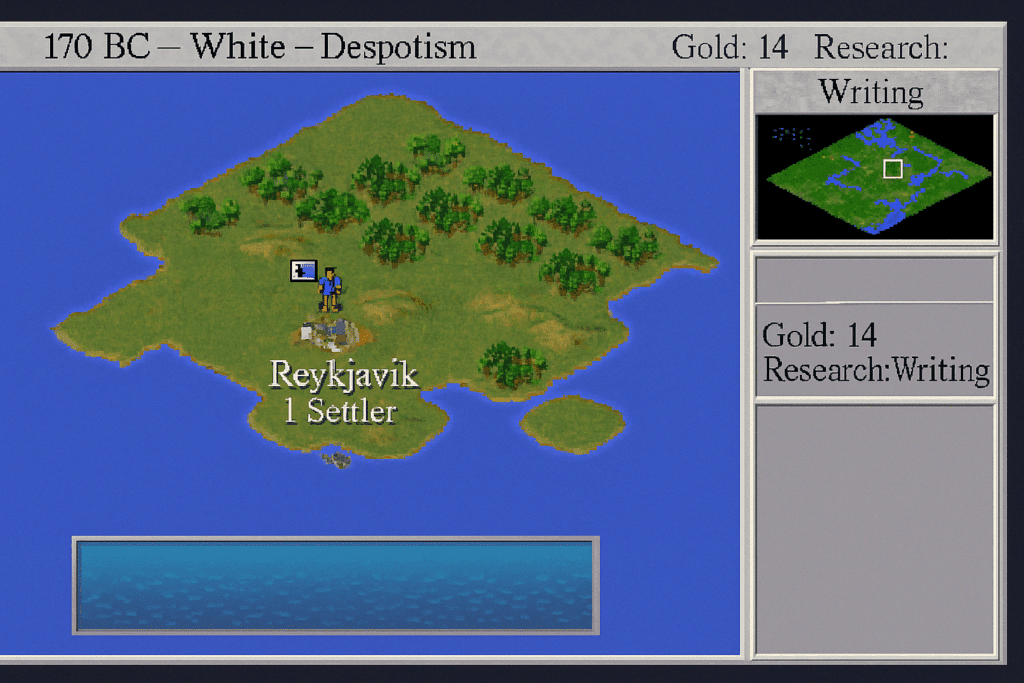
In Civilization II, you start with a single settler and must decide where to found your first city. From there, your goal is to expand, explore, and dominate the world through diplomacy, science, economy, and military power. The game features:
- Over 20 civilizations to choose from
- 7 scientific eras, from Antiquity to the future
- Options for diplomacy, alliances, and espionage
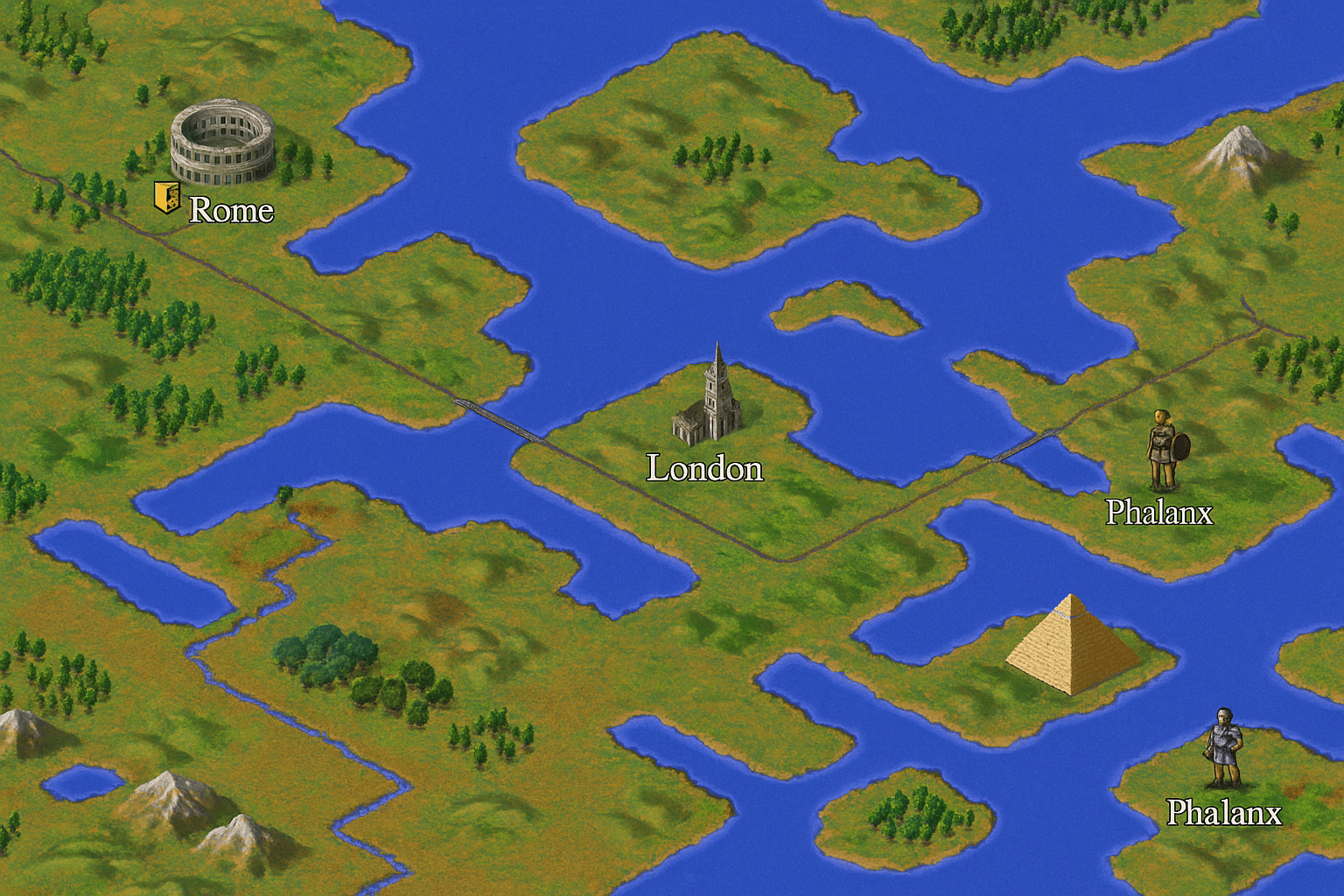
- Construction of historical wonders such as the Colosseum, the Pyramids, and the Apollo Program
- Multiple victory conditions: military conquest, space race (Alpha Centauri), or score-based
Graphics and interface
Civilization II’s graphics were significantly improved over the original. The game shifted to an isometric 2D perspective that still provides a surprisingly clear, readable view of the world map. City screens, the tech tree, and diplomacy windows are functional and era-appropriate in their simplicity — yet highly effective.
Strategic depth and challenges
One of the game’s great strengths is its complex balance between technological progress, warfare, and diplomacy. You constantly weigh decisions: expand your infrastructure or upgrade your military? Trust your neighbors or prepare for betrayal?
The AI can be both cunning and aggressive — especially on higher difficulties, where even small early mistakes can cost you everything. Diplomatic agreements can be broken quickly, and a seemingly peaceful neighbor may suddenly invade if you appear weak or strategically vulnerable. This forces you to stay proactive and think several moves ahead.
There’s also a psychological game at play: when you build world wonders, you risk making yourself a perceived threat, which can trigger unwanted wars. Conversely, you can use technology to intimidate opponents by achieving military superiority without firing a shot.
The game’s depth means it rarely plays out the same way twice. You can pursue a peaceful science victory, rule as a decisive emperor, or become a ruthless warlord — and each path leads to very different outcomes. It’s this freedom and the ever-shifting geopolitical dynamics that make Civilization II a masterpiece, even decades after release.
Who should play Civilization II today?
If you love strategy, history, and turn-based gameplay, Civilization II is still a gem — perfect for nostalgic veterans and newcomers who want to understand the roots of the genre. It works well in DOSBox and can be downloaded free from reputable abandonware sources, as it’s no longer officially sold.
Top 5 secret tips for Civilization II
Use goody huts early
Barbarian camps and ruins (goody huts) can grant free techs, units, or gold — send scouts to secure them quickly before other civilizations do.
Hide units inside enemy borders
Position units on enemy territory just outside cities to discourage expansion — especially if you have a ceasefire or alliance. It works as passive pressure.
Leonardo’s Workshop is overpowered
Build Leonardo’s Workshop as soon as possible — it upgrades all your units for free whenever you research a new military technology. That’s a huge strategic edge.
Democracy + spies = control
Play as a Democracy for maximum production and trade, but use spies to sabotage enemies. It balances freedom with covert aggression.
Build only essential roads
Roads boost trade but require upkeep. Place them on bonus tiles and between cities only. Avoid overbuilding — it drains resources in the early game.