 Martin Jørgensen
Build your kingdom brick by brick — and win with the strategy that suits your playstyle
The Settlers 7: Paths to a Kingdom is a charming strategy and city-building game where you build a well-functioning kingdom, manage production, expand your territory, and choose your own path to victory.
It’s one of the more tactical entries in The Settlers series because it’s not just about putting up the most buildings as quickly as possible. You need to manage raw materials, trade routes, soldiers, clergy, research, and your economy — and small planning mistakes can quickly be felt several steps later in the production chain.
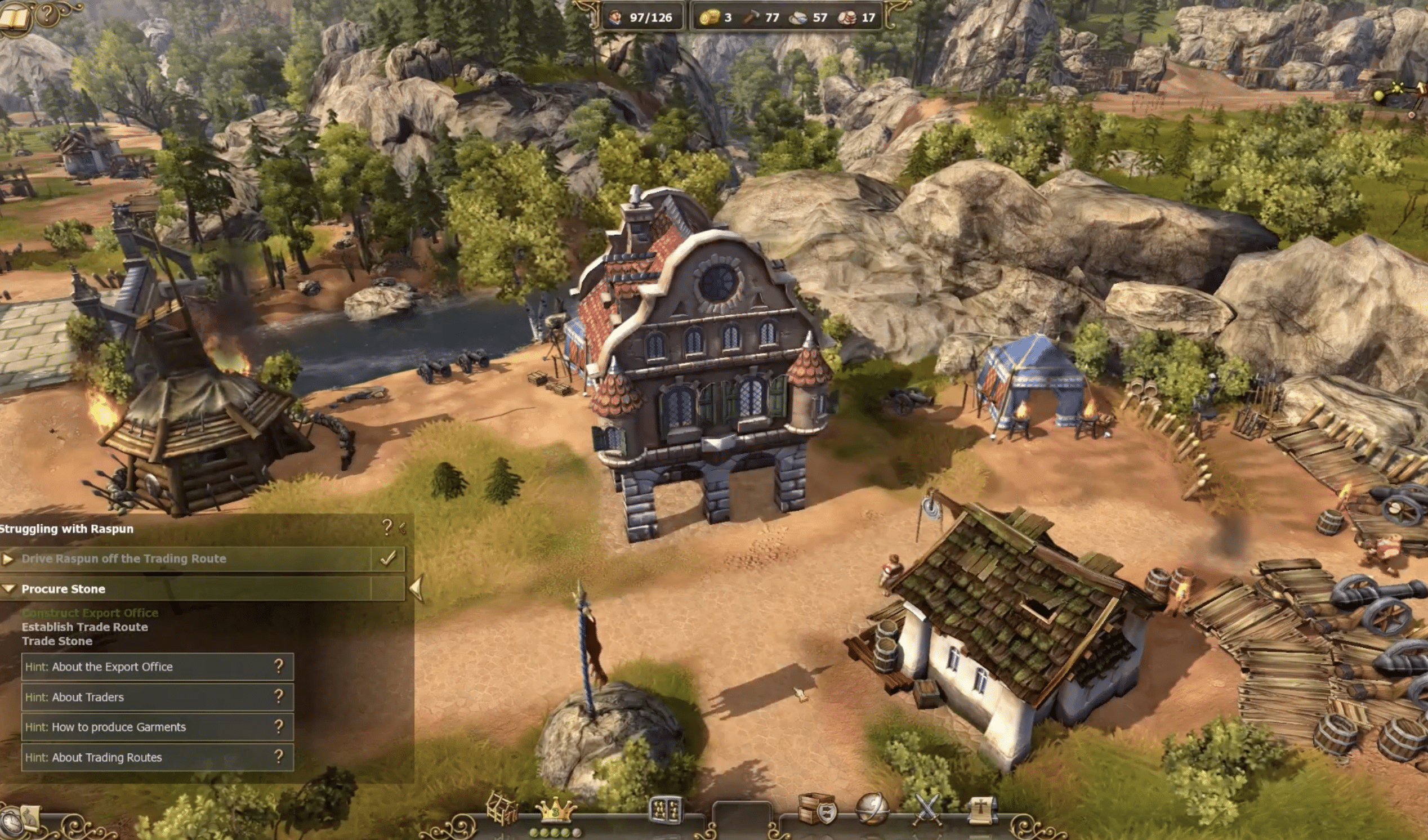
We tested the modern version on a Windows 11 PC, and the first thing that struck us was how cozy and lively the game still feels. Little settlers wander between sawmills, mines, bakeries, and markets as the landscape slowly transforms from open nature into a bustling little kingdom. It’s not a game for those who want nonstop action every second, but patient strategy players will still find plenty to enjoy.
Classic The Settlers with clearer paths to victory
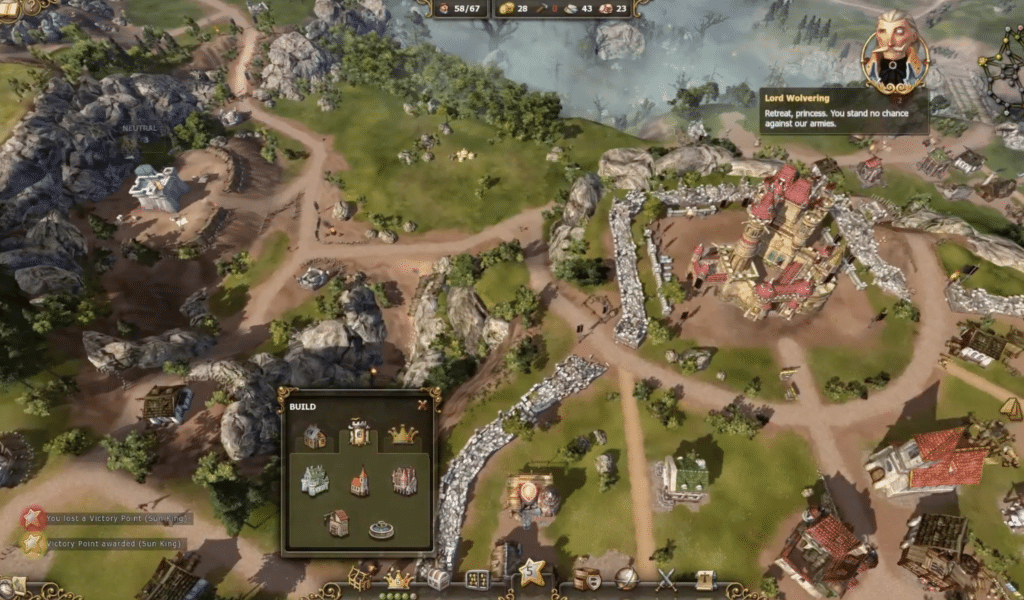
The Settlers 7: Paths to a Kingdom stands out from many other city builders by giving you multiple ways to win. You can bet on military strength, develop technology, expand trade, or dominate the map through strategic expansion.
That gives the game a different rhythm than typical real-time strategy titles. You’re not just pumping out large squads. Instead, it’s about understanding how your whole society fits together. If you don’t have enough bread, your workers suffer. If you’re short on wood and stone, expansion stalls. And if your trade routes are poorly planned, even a strong economy can start to wobble.
There’s something deeply satisfying about getting a production chain to run perfectly. When the sawmill delivers planks, the miners are fed, and your soldiers are supplied without bottlenecks, the game feels like a living puzzle.
Construction, economy, and logistics demand oversight
The heart of The Settlers 7 is still city-building. You start small, but you’ll quickly need more buildings, more resources, and better connections between different parts of your kingdom.
It sounds simple, but the game’s strength lies in the details. Every building has a purpose, and many of them depend on each other. A poorly placed building won’t necessarily ruin a run, but it can slow your city down and make it less efficient.
In testing, we especially noticed that the road network and production building placement matter more than you’d think. You can certainly play casually, but if you want to beat tougher maps efficiently, you need to think several steps ahead. That’s where the game still shines: it rewards planning without losing its charm.
A whimsical and colorful strategy world
Visually, The Settlers 7 still looks great in a cozy way. It’s not photorealistic, and it doesn’t try to be. Instead, it uses a colorful, almost storybook style where buildings, landscapes, and characters have tons of personality.
The animations do a lot for the experience. Little workers haul goods around, production buildings buzz with life, and the map feels more active the longer you play. It’s a style that ages better than many more realistic strategy games from the same period.
The audio matches the mood as well. The music is calm and atmospheric, and the small town sound effects make it pleasant to play for long stretches. You can almost let it run as digital comfort — until you realize your economy is stalling because you’re missing coal somewhere in the chain.
History Edition is the best way to play today
Today, most players should opt for The Settlers 7: History Edition, the modernized version that’s easiest to recommend to newcomers. Steam describes it as a modernized edition of The Settlers 7, and it’s the version that makes the most sense to point players to now.
The classic version of The Settlers 7: Paths to a Kingdom is still referenced in places, and the game is known as a Windows and macOS strategy game developed by Blue Byte and published by Ubisoft. But for everyday players who just want to jump in without messing with older builds, History Edition is the most straightforward choice.
It’s worth noting that the game doesn’t feel fully modern in every detail. The UI can feel a bit heavy if you’re coming straight from newer strategy titles, and the pace is slower than many current games. That said, it’s also part of the charm. The Settlers 7 is about oversight, patience, and small decisions — not quick reflexes.
For players who miss true city-building with strategy
The Settlers 7: Paths to a Kingdom is a great pick if you enjoy games like Anno, Stronghold, Banished, or the older Settlers titles. It’s not as grand as modern grand strategy, but it has a special balance between cozy vibes and tactical depth.
The game is at its best when you take your time. If you try to rush, you’ll quickly lose the overview. But if you like optimizing production, finding better routes, and gradually building a stronger kingdom, there are still many good hours here.
The biggest downside is that it can feel a bit opaque at first. New players need a moment to find the rhythm, and some mechanics aren’t explained as elegantly as you might like. Once the systems click, though, it’s hard not to play “just one more map.”
Top 5 tips for The Settlers 7: Paths to a Kingdom
Don’t build too fast at the start
It’s tempting to cover the map with buildings right away, but in The Settlers 7 it pays to build deliberately. First secure steady access to wood, stone, and food so your economy doesn’t stall after the opening minutes.
Watch the entire production chain
If one resource is missing, several buildings can be affected at once. Don’t just check the building that’s idle — also examine the steps before it. The issue is often a bottleneck further up the chain.
Pick a clear path to victory
The game offers multiple ways to win, but it’s rarely smart to invest equally in everything. Decide early whether to focus on military, trade, technology, or territory, and build your strategy around that.
Place buildings close to the resources they use
Long transport routes slow your city down. If a building is constantly waiting for goods, it often helps to place production closer to the raw material or adjust your road network so settlers spend less time walking.
Save before experimenting
Some maps can swing quickly if you expand poorly or misprioritize the army. Save before trying a new strategy so you can recover without starting from scratch.
The Settlers 7: Paths to a Kingdom is still a cozy, tactically strong strategy game — especially for players who miss classic city-building with more depth than you notice at first glance. It requires a bit of patience, but the reward is a living kingdom where every production chain and every small decision matters.